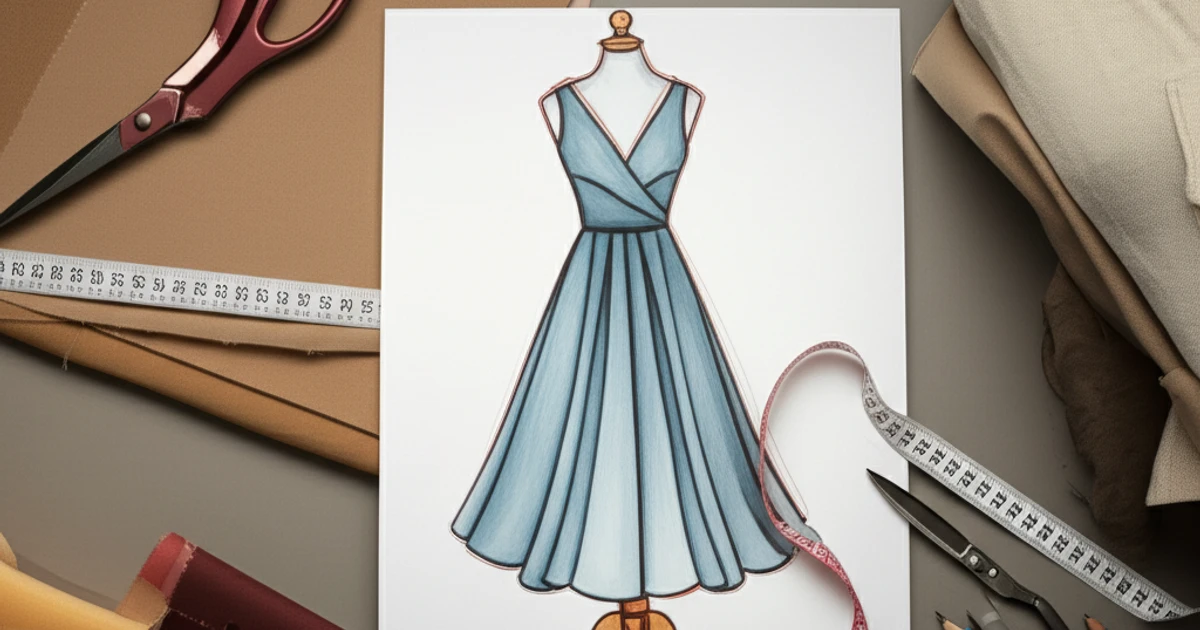
Imagine a world where an idea, a mere flicker in your mind, transforms into a tangible masterpiece Garment Construction you can wear. That’s the magic of fashion design, a journey from an abstract concept to a beautifully constructed garment. For design students eager to learn, boutique owners curious about their product’s journey, fashion enthusiasts who appreciate the craft, and apparel makers refining their *clothing design workflow*, understanding the complete *sketch to stitch process* is not just valuable—it’s essential.
Today, we’re peeling back the layers to reveal the intricate dance of creativity and precision that defines *garment construction in fashion design*. It’s more than just drawing and sewing; it’s a methodical, often passionate, *garment production process* that demands expertise, experience, and an unwavering eye for detail. Let’s embark on this fascinating journey together, tracing every meticulous *fashion designing step* from concept to completion.
*
Where Does the Dream Begin? The Spark of Conception
Before any fabric is touched or a single stitch is planned, every garment starts as a whisper of an idea, a flash of inspiration. This initial phase is a vibrant playground of imagination, where you, the designer, immerse yourself in research, trends, and personal vision. Think of it as laying the very foundation of your creative house. You’re not just drawing; you’re envisioning a story, a mood, an entire lifestyle that your future garment will embody.
This stage involves deep dives into trend forecasting, socio-cultural influences, and historical fashion. You’ll gather images, textures, colors, and words to form a compelling mood board—a visual symphony that encapsulates your collection’s essence. From this rich tapestry, initial concept sketches, often called croquis, begin to emerge. These aren’t just pretty pictures; they’re the first visual representations of your design intent, exploring silhouettes, proportions, and details, setting the stage for the rigorous *fashion designing steps* that follow.
How Do You Translate Vision into Blueprint? The Art of Pattern Making
Once your design is crystallized on paper, the real engineering begins. How do you take a two-dimensional sketch and transform it into a three-dimensional form that gracefully drapes the human body? This is where the meticulous art of pattern making comes into play, arguably the most critical juncture in the entire *apparel construction* process. It’s the bridge between abstract idea and tangible reality.
Pattern makers, with their blend of geometry and intuition, translate your design into flat paper patterns. This can be done through various techniques: flat pattern making (drafting patterns from measurements), draping (manipulating fabric directly on a dress form), or increasingly, digital pattern making software. Each piece of the garment—front, back, sleeves, collars—is precisely drafted, accounting for seam allowances, grainlines, and fit points. It’s a painstaking process, often involving several iterations and muslin mock-ups (toiles) to perfect the fit, ensuring the garment moves and flows exactly as you envisioned. This detailed pattern becomes the blueprint for every subsequent stage of the *garment production process*.
Bringing Fabric to Life: The Crucial Cut
With the pattern perfected, the next logical *fashion designing step* is selecting the perfect fabric. This choice isn’t just aesthetic; it’s functional. Does your design call for a flowing silk, a structured wool, or a comfortable jersey? Each fabric has unique properties—drape, weight, stretch, and durability—that significantly impact how the final garment will look and feel. As a design student, understanding fabric science is paramount; for boutique owners, it’s about knowing the quality you’re offering.
Once the fabric is chosen, it’s laid out, often in multiple layers, on a cutting table. This is where the “marker” comes in—a layout of all the pattern pieces designed to minimize fabric waste, a crucial consideration for both cost and sustainability. Precision is key here. Skilled cutters meticulously follow the marker, using specialized shears or automated cutting machines. An inaccurate cut at this stage can throw off the entire *apparel construction* process, leading to ill-fitting garments and costly waste. This phase truly highlights the blend of artistry and industrial efficiency in the *clothing design workflow*.
The Symphony of Seams: Construction & Assembly
Now, the individual pieces of fabric, once cut, begin their transformation into a cohesive garment. This is the heart of the *sketch to stitch process*—the actual sewing and assembly. It’s where the skilled hands of sewers bring the blueprint to life, piece by painstaking piece. Think of it like an orchestra, where each seamstress or sewing machine operator plays a specific part to create a harmonious whole.
Beginning with main seams, then incorporating intricate details like darts, pleats, and gathers, the garment slowly takes shape. Interfacing might be applied for structure, linings added for comfort and finish, and closures like zippers and buttons integrated. Throughout this *garment production process*, quality control checks are paramount. A sample garment, often the “first sample,” is produced and meticulously inspected, and often fitted on a model, to ensure everything aligns with the original design vision and desired fit. Any adjustments are fed back into the pattern, refining the design further before larger production runs.
The Finer Touches: Embellishment & Finishing
As the garment nears completion, it’s time for the details that elevate it from merely sewn fabric to a truly finished product. This stage is all about perfection, adding those exquisite touches that speak volumes about craftsmanship and attention to detail. What makes a garment truly sing? It’s often in these final, delicate steps.
This phase includes the attachment of buttons, snaps, hooks, and eyelets, as well as any decorative embellishments like embroidery, beading, or appliques. Labels and care tags are sewn in, branding the garment and providing essential information. Perhaps one of the most underrated but crucial steps is pressing. A professional press can entirely transform a garment, giving it crisp lines, smooth surfaces, and a polished appearance that elevates its perceived value. Finally, each garment undergoes a rigorous final inspection, ensuring every seam is secure, every button is firmly attached, and every detail is perfect before it’s packaged and ready to make its grand entrance into the world.
*
From that initial spark of imagination to the final, perfectly pressed garment, the *sketch to stitch process* is a testament to human ingenuity, precision, and passion. It’s a journey filled with challenges and triumphs, demanding a harmonious blend of artistic vision and technical prowess. Whether you’re a budding design student or an established apparel maker, appreciating these intricate *fashion designing steps deepens your connection to the clothes we wear and the stories they tell. This intricate clothing design workflow is truly an art form, one stitch at a time.
