Introduction
Just imagine stepping into a space that feels immediately inviting, balanced, and thoughtfully arranged. That’s the subtle power of spatial planning in interior designhttp://nifglobalchennai.com/-the art of making every inch of a room both beautiful and functional. Be it for designing a cozy apartment, a modern workspace, or even a luxurious home, spatial planning ensures the space not only looks appealing but also serves its purpose effectively.
This forms the very foundation of interior design education at NIF Global Chennai. It imparts in students the skills to plan layouts, manage proportions, and create spaces that exactly reflect personality and style.
What is spatial planning in interior design?
Spatial planning is much more than deciding where furniture goes; it is a strategic process of space organization for harmony, flow, and efficiency. This includes consideration of human behavior, movement, natural light, and visual balance.
Put simply, spatial planning forms the blueprint of your design dreams-it takes ideas and turns them into livable, practical environments. It’s what takes students of design, as well as professionals, beyond mere decoration and into the realm of purposeful design.
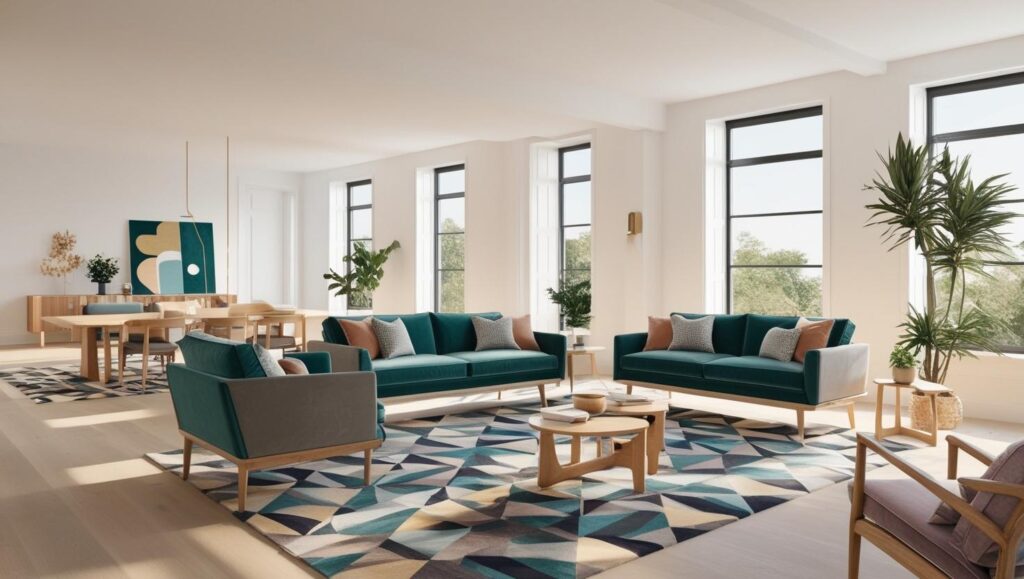
For example, an open-plan living room requires balancing openness with defined zones for dining, relaxing, or entertaining. A well-planned space will ensure these areas blend seamlessly without feeling cramped or disjointed.
Why Interior Designers Must Be Masters of Spatial Planning and Styles
It is the interior design styles that define the visual language of the space, whether minimalist, modern, traditional, Scandinavian, or eclectic. The spatial planning gives life to these styles through arrangement and proportion.
Take the Scandinavian style, for example. Characterized by simplicity, light tones, and functionality in design, this style is all about open layouts and uncluttered flow. Spatial planning should ensure furniture placement supports natural light and visual calmness.
While traditional interiors rely on ornate furniture and rich textures, spatial planning here needs to take into account that rooms are not crowded yet remain elegant and symmetrical.
When spatial planning coincides with style, harmony is achieved: a space telling one story. Designers who understand the relationship between them know how to create not only beautiful spaces but emotionally touching ones, too.
How to Balance Beauty and Functionality in Spatial Planning
Interior design is all about finding a balance between aesthetics and practicality. If a room looks beautiful but feels inconvenient, that room will never be a true success.
Here’s how to achieve that balance:
Define the Purpose
Every room serves a purpose-relaxation, work, dining, or entertainment. Understanding this helps determine the type of furniture, placement, and circulation.
Plan the Layout Thoughtfully
Ensure pathways are clear of clutter. Movement should be natural and unimpeded.
Use Multifunctional Furniture
In compact spaces, the sofa can become a modular guest bed, while the extendable dining table may double as a workplace.
Embrace Lighting as a Design Element
Natural and artificial light improve spatial perception. Employ ambient, task, and accent lighting where appropriate.
Play with Proportion and Scale
Furniture should match the size of your room, since oversized furniture can overcrowd it in case the room is small, and too small pieces make big areas look empty.
According to one 2024 Interior Design Trends Report, more than 68% of homeowners prefer designs that optimize comfort and usability, showing that functionality is just as valuable as beauty today.
The Role of Technology in Modern Interior Design
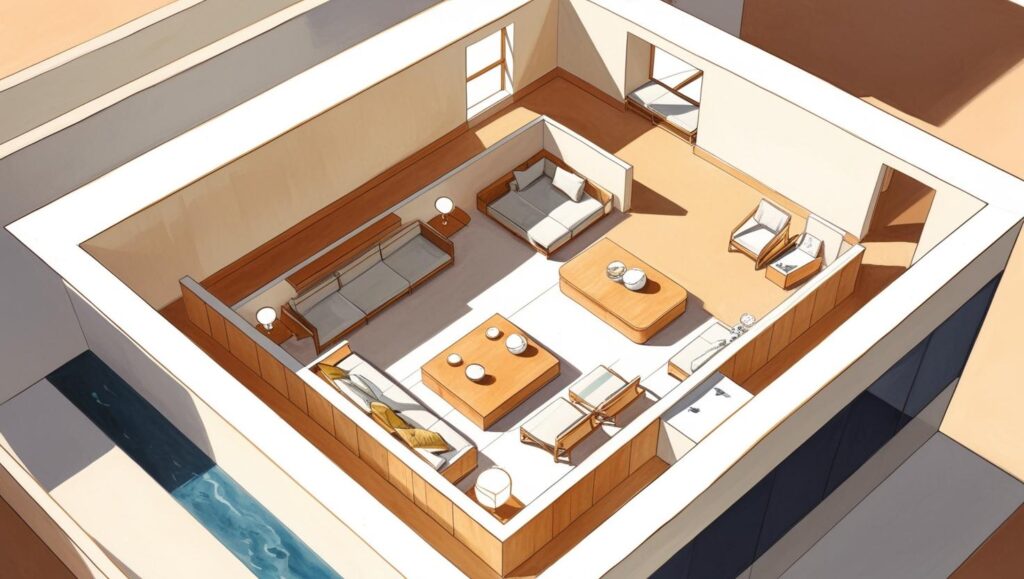
Technology is revolutionizing the way interior designers approach spatial planning. Designers can now conceptualize ideas prior to actual execution with the help of 3D modeling, AR, and VR capabilities.
3D Software: AutoCAD, SketchUp, among others, assist in creating precise floor plans and visualizing proportions.
AR/VR Applications: These tools enable the client to “walk through” virtual rooms and explore various layout options in real time.
AI-driven software will automatically optimize the placements for efficiency and balance by using smart space planning tools.
A recent industry survey showed that more than 75% of interior designers today use digital visualization tools for better accuracy and fewer design revisions. The integration of technology has, therefore, made design education-in particular at institutes like NIF Global Chennai-more immersive and hands-on.
How to Practice Spatial Planning in Your Own Space
You don’t have to be a professional designer in order to apply these principles. Try them in your home:
Declutter Before You Design
Remove unnecessary items. An area with no clutter will make spatial decisions even easier.
Define Zones
Use area rugs, lighting, or furniture placement to create visual divisions of spaces: for example, a reading nook within a living room.
Experiment with Layouts
Try a few different arrangements until one sounds natural.
Think Vertically
Use wall-mounted shelves or tall storage units to save floor space.
Be Flexible
Spatial planning isn’t something fixed. As your needs evolve, rearrange or adapt the design.
Remember, good design grows with you. One of the greatest strengths of spatial planning is flexibility. About NIF Global Chennai NIF Global Chennai is a premium design institute offering B.Des, B.Voc, Diploma, and Certificate Courses in Fashion, Interior, and Textile Design. Our curriculum couples creativity with technology, from spatial planning and 3D modeling to sustainable materials and trend forecasting. We prepare students to meet real-world design challenges with innovation and confidence. ???? Visit www.nifglobalchennai.com Explore our design courses to begin your creative journey today. Author Bio Contributed by – NIF Global Chennai – Interior Design Faculty Team Our faculty comprises practicing architects, interior designers, and educators who are genuinely dedicated to grooming the next generation of creative professionals. We bring practical industry insights and a deep understanding of design psychology to every classroom. FAQs Q1: What is spatial planning in interior design? It’s the art of organizing space to ensure balance, comfort, and efficient movement within a room. Q2: Why is spatial planning important? It will determine how functional and aesthetically pleasing a space is, meaning that every area will serve its purpose. Q3: How does technology help in spatial planning? AR, VR, and 3D tools enable designers to visualize and adjust layouts before actual implementation, thereby saving time and cost. Q4: Is spatial planning teachable to beginners? Of course, this art and science can be learned by any person with advice from experts or institutes like NIF Global Chennai. Q5: What’s the biggest mistake in spatial planning? Ignoring function, a beautiful room that disrupts comfort or usability has not achieved true design balance.