Author name: nifdglobalchennai.com

Blog, Hair Care & Styling

From Texture to Trends: Understanding Hair Types and Styling Essentials

Hair is not a one-size-fits-all affair. Whether you have sleek, straight strands or bouncy curls, understanding your unique hair texture is key to mastering hair trends and techniques. If you’ve ever struggled with finding the right products, styling tools, or techniques for your hair type, you’re not alone. The good news, however, with a better knowledge of the feel and quality of your hair is that you open up a new world of opportunities for styling it. In this post, we’ll dig into how hair textures affect your styling options and walk through the essential techniques and trends that are hot right now. Whether you’re a hair care aficionado or just starting to learn the essentials of styling, this guide will give you a solid foundation to build from. Understanding Hair Texture: Why It Matters Take it from here by starting with something simpler: a core aspect that distinguishes your hair, the texture. The texture of the hair is referring to the original way your hair came naturally, being either straight, wavy, curly, or coily. In knowing what type of texture one’s hair holds, it tells much about its tendency and responses when styled differently. It lies flat and sleek with a smooth texture. Most of the times, it’s manageable, though can be droopy if proper styling or products for added volume aren’t given to it. Wavy Hair: It falls somewhere in between straight hair and curly hair. Often when the hair becomes versatile and holds beautiful waves, it often gets a bit troublesome when humidity occurs. Wavy hair requires some moisture with light styling to reduce frizz. Curly hair: The curls are full of bounce and body. It follows the natural ringlet or spiral appearance. It is dry so prone to frizz, so the hair needs moisturizing. Knowing different types of curls, such as loose curls, tight curls, etc will give you an idea of which technique and products would be best to use. Coily hair: It is very tightly coiled with a spring-like curl or even zig-zag pattern. It needs much moisture and is often the most fragile hair type. If not taken care of, it breaks easily, but when styled correctly, it’s absolutely stunning. Hair Quality: More Than Just Texture This is the quality of hair that determines the kind of effects different styling products and techniques bring out in this hair. Variables such as the porosity; that is to say, its ability to intake moisture or wetness-considering density by how thick/thin one strand is- all these make their way in explaining the hair texture and how your hair feels with regard to both health and texture. Porosity: Hair that is very porous will take in moisture really easily but won’t hold much. Low porosity hair tends to resist the moisture, causing it to dry out and be lifeless. Knowing your hair’s porosity will help you choose the correct moisturizing product. Density: Thick hair generally requires stronger product and tools. Fine hair is usually better when using lightweight formula and gentle technique. Elasticity: Hair with good elasticity bounces back easily when stretched, while hair with low elasticity may break or snap under stress. For healthy hair, minimize breakage through styling techniques. From Texture to Trends: Top Styling Essentials Knowing now what makes up your hair texture and quality, let’s talk about some of the hottest hair trends and techniques for each type. Whatever your hair texture, there’s a styling trend that’s right for you. Sleek, straight styles for smooth sophistication Sleek styles are perhaps one of the favorite styles with shiny straight hair. The simple yet polished look is very on-trend nowadays. You can create this style by using a flat iron along with some smoothing serum. It looks particularly stunning when done for medium to thick hair as it makes the tangles disappear, resulting in an almost glassy high-gloss finish. Beachy Waves Effortless vibes Wavy hair is great for the laid-back, beachy vibe. Use a curling iron or texturizing spray for loose waves for that effortless, windswept feel. A light mousse can add volume to finer wavy hair; thicker waves need a little more product to keep the shape in place. Curly Perfection with Defined Curls: Curly hair is all about embracing those beautiful, bouncy curls. In order to define them, a curl cream or gel can be used that will enhance the natural curl pattern without weighing it down. The new trend is defined, soft curls, and this can be achieved with the right styling cream and a diffuser attachment on your blow dryer. Bold Coils with a Natural Texture Coily hair has become the face of this trend, embracing all the beauty that comes with natural texture. Moisturize and protect that hair so your coils are healthy and defined. Techniques like the “shingling method” apply product in sections for even distribution. Other popular protective styles include braids or twists for keeping coily hair looking great. Styling Techniques for Every Hair Type No matter your hair type, the proper styling technique will be what makes the difference in your appearance. Here are some general tips that’ll work for anyone: Heat Protection: Always use a heat protectant before hot tool usage. This protects your hair from damage and keeps it healthy and shiny. Use the Right Tools: Whether it is a flat iron, curling wand, or a blow dryer, you must choose the tool suited for your hair type. If you have fine hair, you must use a softer heating level while denser hairs require more temperature setting to style them. Deep Conditioning: Hydration is always the key for any hair and irrespective of the hair texture, deep conditioning treatments may be a necessity in your daily routine to make the hair soft, shiny, and healthy-looking. Tailored hair products: Stock up on that product for hair type. May it be curl cream to scrunch curls or serum to smoothen straight; the right type of product should get you closest to your vision. Conclusion: Accept your
Beauty and Makeup Tips, Blog

Foundation 101: Picking the Perfect Formula for Every Skin Texture

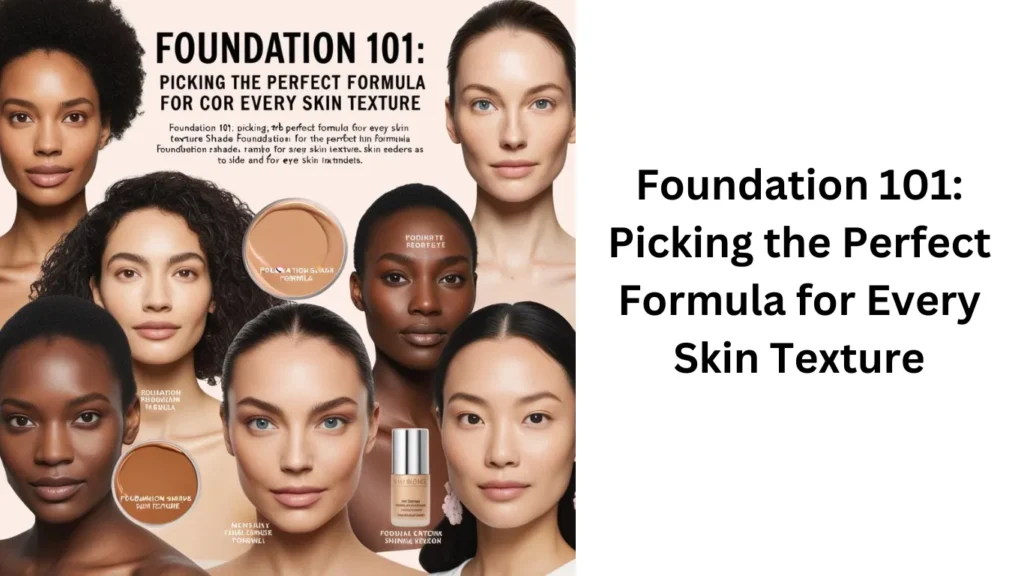
Foundation is, after all, the basis of all makeup. It is that first layer, the one which lays the ground for the entire rest of the makeup, giving way to a smooth canvas to paint blush on or eyeshadow. And with so many formulas and choices available, finding the right foundation for your skin type or the skin texture of your client can be quite confusing. That is where a strong foundation of knowledge in the basics is applied. Whether you are a makeup aficionado or a person looking to make a hobby a career, perfecting the application of foundation is the most important thing. In this blog post, we will break down the basics of choosing the right foundation for every skin texture, while also introducing the Fundamentals of Makeup & Hair Trends Certification—a course designed to help you navigate the world of foundation and makeup like a pro. Understanding Different Skin Types and Textures Now, before you are thinking of picking a foundation, it is an important awareness whether you have a specific skin type or your client has one. Actually, the skin texture can vary broadly, starting from oily to dry and even sensitive or combination. Each kind of it requires special needs, so picking the wrong foundation formula leads to makeup mishaps. Here’s a quick guide to different skin types and how they affect foundation selection: If your skin is very oily, find a foundation which will control the shine and give it a matte look. Look for oil-free long-lasting foundations that won’t clog pores but control shine and ensure a good flow of coverage at the same time. Dry skin: Hydrating foundations are a must for dry skin. Cream or liquid foundations with moisturizing ingredients such as hyaluronic acid will help keep your skin looking smooth and dewy. Avoid matte formulas because they can make dry skin look even drier. Combination Skin: A combination of both oily and dry areas, so you should look for a foundation that can balance it. A good option for individuals with combination skin would be a semi-matte because it helps keep the shine under control without pushing through the dry patches. Sensitive skin: Very delicate skin, especially around the eyes, calls for special attention to foundation choice. Look for fragrance-free, non-comedogenic, and harsh chemical-free formulas. Mineral foundations are very often a great fit for sensitive skin, as they are known to be very gentle and soothing. Normal Skin: You’re in luck if your skin is normal. Neither too oily nor dry, most foundations will work well for you. If you want a natural, fresh finish, look for lightweight foundations that provide medium coverage. Choosing the Right Formula for Your Client If you are a makeup artist or if you’re someone who intends to work with various clients, it is very important to understand how to select the right foundation formula. This can be critical since each client will have their skin type and preferences. It’s here that the Fundamentals of Makeup & Hair Trends Certification comes in handy. How the Fundamentals of Makeup & Hair Trends Certification Helps The Fundamentals of Makeup & Hair Trends is a course set up for learners who want more insight into various makeup techniques and the different kinds of skin so that they might learn how to apply the proper foundation for very different clients. This course not only teaches how to choose the right foundation formula but also equips you with a deeper understanding so that you would know what suits your client differently and deliver perfect, flawless finishes. 1.Understanding Skin Types One of the first things the course teaches is how to identify different skin types and textures. Whether you’re working with a client who has acne-prone skin, dry patches, or a combination of both, the course covers it all. You’ll learn how to tailor your foundation choice to each skin type, ensuring that your client’s skin is prepped and ready for a perfect application. 2.Application Techniques Choosing the right foundation is one thing, but applying it properly is another. The certification course dives deep into different application techniques, such as using brushes, sponges, or fingers, and how to layer foundation for the most natural finish. You’ll also get tips on how to set foundation so it lasts all day. 3.Product Recommendations The course goes beyond theory and provides real product recommendations based on various skin types. Whether it’s full-coverage or sheer, matte or dewy, you’ll be guided through which products work best for different clients and occasions. 4.Customization for Every Client All of the clients will have different tastes when it comes to their foundation. Some people like it lightweight, while others may want a full coverage type. The course teaches you to meet each and every client’s needs, including having a foundation color that matches your skin tone as well as matching the finish or coverage they might be looking for. Tips to Select the Perfect Foundation Formula: Where else would you practice becoming a master of foundations as this course lets you have ALL the tools but here are just a few very quick tips regarding choosing a formula for any particular skin type- Test Shades Always test the shades of a foundation in actual natural light-the best match-the foundation should ideally blend into skin without leaving noticeable line along your jawline. Prep the Skin: Moisturize and prime the skin before applying foundation. This will help the foundation apply more smoothly and stay in place longer. Know Your Client’s Preferences: Don’t forget to ask your clients what type of coverage and finish they prefer. Some might like a full coverage foundation, while others may want something light and breathable. Consider the Weather: Weather can affect how foundation wears. On hot days, opt for long-wear formulas that control oil and sweat. In colder weather, choose foundations with moisturizing properties to prevent dryness. Conclusion There is no reason why you have to make foundation selection daunting with every type

Beauty and Makeup Tips, Blog

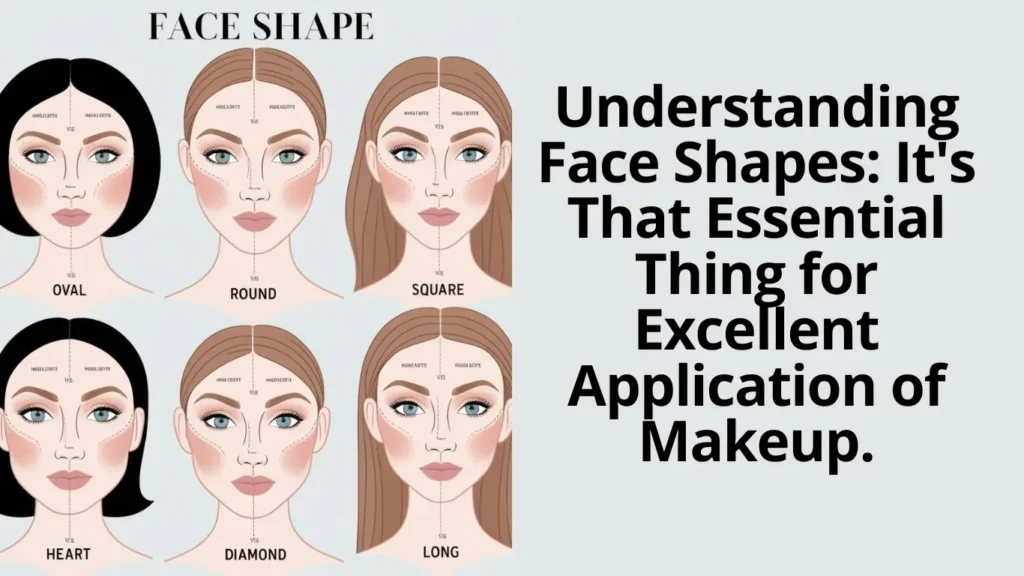
Understanding Face Shapes: It’s That Essential Thing for Excellent Application of Makeup.

If your desire is perfect makeup, few remember the trick; that little detail that takes everyone’s makeover techniques to a notch of good enough towards flawless application would be that a person’s ability to know her contours, her face angles and proportional dimensions does most of that detailing. Read through to get this very relevant change in technique now. Why Face Shape Matters Although every face is unique, most fall into one of six categories: oval, round, square, heart, diamond, or oblong. Each has distinguishing features, and knowing them will help you decide how to apply makeup. Think blush, contouring, or highlighting. It can really make your features work for you instead of against the shape of your face. Mastering the application of makeup no longer merely serves as an application process but rather a balancing process of blending to reveal better features, at the same time, catches up on hair and makeup trends widely followed today because it caters to certain types of faces. Considering options of certifications such as the Fundamentals of Makeup & Hair Trends Certification, it can be unique and may eventually mark out one to be part of that industry. Finding Your Face Shape You can even determine your face shape. Push the hair off of your face to observe the outline in a mirror. Measure and compare the breadth of the forehead, cheekbones, and the jaw and face length by doing the following: Oval: Broader across the forehead than at the chin; width and length proportionate Square: Equally matched width and forehead and cheek. Heart: A broad forehead leads to a narrow, pointed chin. Diamond: Narrow forehead and jaw, wide cheekbones. Oblong: A long face having equal cheek width, forehead width, and jaw width. Face Shape Knowledge in Transforming Makeup Techniques Now that you have known your face shape, you can easily make makeup techniques adapt according to your needs so as to give you amazing looks. Here’s how: 1.Contouring and Highlighting An oval face will be just fine on the slightest quantity of cheekbones contouring it to elongate the already beautifully balanced face. For round-faced people, putting contours on one side of their forehead and other jaw will definitely lengthen up your face. You can help soften the squares of your faces by applying contour to the temples and jaw points. A heart-shaped face should be contoured to the sides of the forehead and under the chin to counterbalance the larger, wider top of the face. For a diamond face, the center of the forehead and chin can be highlighted to make those areas appear wider. Oblong faces usually look good with horizontal contouring to minimize the length. 2.Blush Placement For round faces, apply blush a little higher on the cheeks to create a lifted look. Apply blush toward the temples to soften sharp angles of a square face. A heart-shaped face can apply blush directly on the apples of the cheeks for balance. 3.Eye and Brow Techniques Diamond faces offset sharp cheekbones with soft, arched brows. Heart-shaped faces are better suited to fuller, rounder brows, as a balancing balance against the narrow chin. Beyond Makeup: Hair Trends and Face Shape Not only does your face shape determine your makeup, but it also determines the best hair style. Soft waves balance the square jaw, while long layers complement an oval face. Further certifications like the Fundamentals of Makeup & Hair Trends Certification can be really helpful in gaining a deeper insight into how one can combine makeup and hair trends with face shapes for styling in harmony. The Confidence Boost One of the most rewarding aspects of mastering face shape knowledge is the confidence it brings. Whether you’re applying makeup for yourself or a client, you’ll feel empowered to make informed choices that enhance natural beauty. It’s a skill that pays off in personal satisfaction and professional credibility. Ready to Transform Your Makeup Skills? Understanding your face shape is something more than a beauty hack – it’s a starting point in perfect makeup. Whether you’re a beauty addict or a beauty student, these skills will turn your approach around to makeup and make you learn to work the beauty craft even harder. And, if you set your skills level higher, here are some suggested certifications such as the Fundamentals of Makeup & Hair Trends Certification that would keep you abreast of the fast change in beauty trends. So, get a mirror and study your face; and the perfect makeup will just be brush strokes away from your face!

Surface Ornamentation: Exploring 2D and 3D Techniques in Fashion
Blog, Fashion Design

Surface Ornamentation: Exploring 2D and 3D Techniques in Fashion

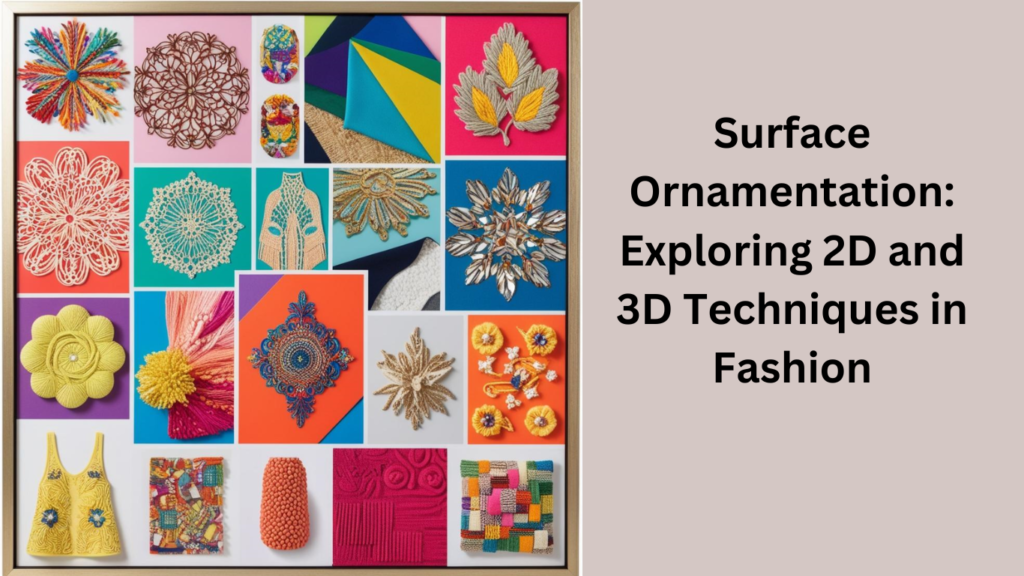
Fashion is not clothes; it is art, culture, and storytelling. By surface ornamentation, the ordinary becomes amazing using either a 2D or a 3D technique. For the fashion designer and textile artist, the ornamentation of the surface plays, as this is the place where creativity lives, that subtle detail between normal clothes and extraordinary clothes. But how can the right technique be chosen for designs? Let’s start and dip our toes into the water of surface ornamentation to examine how 2D and 3D techniques will help bring your creations alive. What is surface ornamentation, and why is it important? Surface ornamentation is the practice of decorating an article of clothing or a textile. It can be done in so many various ways, from embroidery to beading and from sequins to appliqué, all up to cutting-edge laser cutting and digital printing techniques. Always 2D or 3D, these embellishments are used to create depth and texture on the fabric for aesthetic pleasure. Being a fashion designer, one is aware of the fact that little things often make a great statement. Was it perhaps the beadwork down the neckline or the beautiful floral embroidery up the sleeve or shimmering sequins that caught the eye the last time that particular garment came into the scene? They can speak and bring about emotions. It is for this reason they should not be left out when carrying out the process of fashion designing. How do 2D techniques elevate fashion design? When we talk about 2D fashion techniques, we are talking about ornamentation that is applied flat on the surface of the fabric. The most traditional and most widely used method of this is embroidery. With embroidery, you can get very delicate floral motifs or very bold geometric patterns. One of the things that makes embroidery so beautiful is that you have so much room to play around with thread types, stitch techniques, and even add beads or sequins to make the design even more textured and sparkly. Another 2D technique that is popular is fabric printing, where the designs are printed directly on the fabric. It can be done through screen printing, digital printing, or block printing and permits very complex patterns and vivid colors to the extreme and even photographic images. Besides that, these 2D techniques provide a flat yet dynamic way of improving the fabric; in this way, designers may express their creativity in different ways. The beauty of 2D techniques is that they can be applied to any type of fabric, be it lightweight chiffon or thick wool. Whether you are creating a luxurious evening gown or a casual everyday piece, 2D ornamentation can elevate the overall aesthetic. What About 3D Surface Ornamentation? Is It Worth the Effort? While 2D techniques aim at added visual interest in terms of flat design, ornamentation on surface in 3D adds an entire new dimension and texture to the world of fashion. Like sculpted flowers on a jacket, layered ruffles on a dress, or even a structured collar with metallic studs-all such techniques help in standing out and make the visual impact unforgettable. Amongst 3D techniques, appliqué is the most common method. Appliqué is where on the surface of the garment, through stitching, fabric pieces are put together to create raised three-dimensional designs. You could also explore creating texture by pleating, tucking, or manipulating fabric, which would give your pieces more sculptural quality, so to speak, and make them seem as if they come alive, more interactive. 3D ornamentation can add to a particular aspect of the garment, like the dramatic shoulder or the voluminous hemline. This makes it an edgy, avant-garde piece. For the more adventurous, 3D printing in fashion is the new rave. It can create designs that are impossible with any sewing technique: intricate wearable structures, futuristic geometric shapes, and even delicate lace-like designs. How Do You Decide Between 2D and 3D Techniques? All this depends on what you have in mind for your design, the type of fabric you’re using, and what message you want to project. If you want bold and dynamic, then maybe 3D techniques will do it for you. They offer texture, volume, and a tactile quality that 2D techniques just can’t provide. On the other hand, 2D would actually be much better suited toward concepts that would demand rather complicated prints or for a generally very clean design with a rather minimalist look. You may even be able to mesh together bits of both techniques to yield a multi-layered piece in which the 2D prints play off the added 3D embellishment. Beautiful with surface ornamentation is because it’s never-ending with creativity, where one opens up his/her mind toward experimentation until finally coming across something well-balanced for one’s designs. How Surface Ornamentation Can Display Personal Style Surface ornamentation is the method through which designers create their work in a way so that they get something of themselves; it is one of the methods. If you are the kind of designer who really loves nature, then probably you would go for some floral embroidery or maybe a single leaf-shaped appliqué, through which you get that brand new fresh organic look. Alternatively, use geometrical prints or metallic 3D embellishments to produce that sleek modern style look. Let’s talk about how surface ornamentation tells a story. You’re doing a collection based on an era, perhaps the decadent beadwork of the 1920s or textured, architectural designs of the 1980s. Maybe you want your garments to feel a certain way-luxurious, elegant, or playful. Whatever style, though, surface ornamentation provides you with a vehicle to express yourself. Conclusion: The Power of Surface Ornamentation in Fashion Surface ornamentation is another very important stage of the process, which could be 2D or 3D in nature. Techniques give garments some kind of identity, texture, and visual interest. You would be able to make something that will really push the boundary of creativity by exploring such methods of ornamentation as a fashion designer or textile artist. The next time

Pattern Grading and Garment Construction for Men: Techniques and Challenges
Blog, Fashion Design

Pattern Grading and Garment Construction for Men: Techniques and Challenges

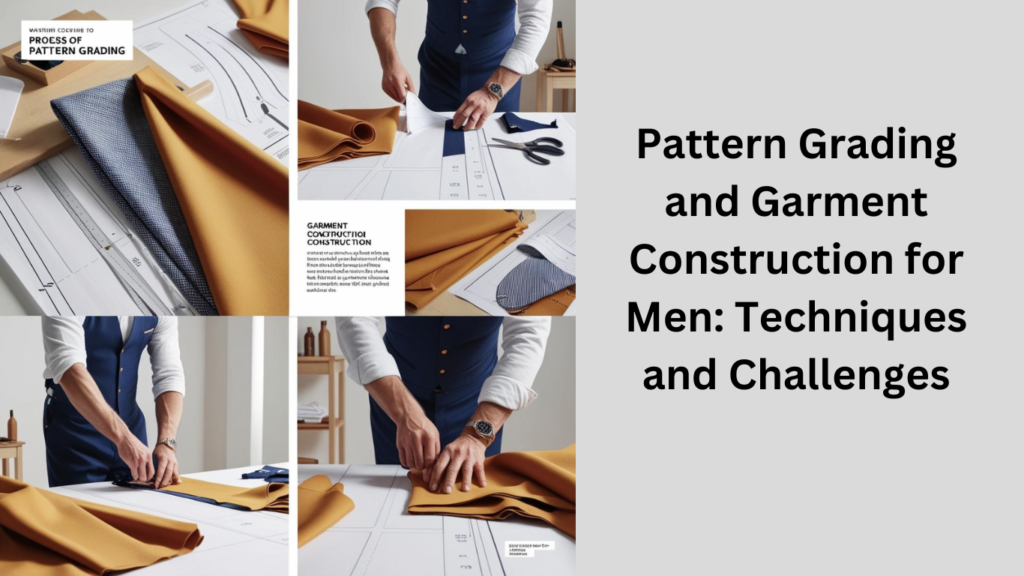
Fashion design for men has evolved over the years, becoming increasingly diverse and inclusive. For the designers, tailors, and seamstresses, it is very important to master the art of men’s pattern grading and garment construction in delivering well-fitted, stylish pieces to cater to different body types. Whether you are creating custom designs or ready-to-wear collections, understanding techniques and overcoming the challenges of pattern grading is a vital skill. Let us learn deep into the world of pattern grading for men and the process of garment construction. This article will explore the very fundamental techniques, discuss the most common challenges, and share insights on how to handle this essential aspect of men’s fashion design. Let’s get started. What is Pattern Grading and Why Does It Matter in Men’s Fashion? Pattern grading is the process of altering a base pattern so that a range of sizes can be made, meaning that a garment fits different body shapes. In men’s fashion, this is the most important step because it allows a single design to be transformed into a collection that can fit men with various builds-from slim, muscular, or broader frames. Now, let’s take an example in which you design a stylish blazer with perfect measurements on a slimmer model. How about a customer having broader chests or larger shoulders? Your answer would be grading. Grading can give you a perfect body of garment shape and style in increasing or decreasing systematic alterations to measurements of the base pattern, depending on your client’s figure. Grading entails the changes of primary measurements such as bust, waist, and hip circumferences plus alterations in sleeve length and shoulder width and the whole garment length. This allows for the maintenance of all proportions and balance in design but for different body types. How Do You Grade Men’s Patterns for Different Body Types? Men’s body types are different from one another, and grading techniques should be designed according to the differences. There are two primary methods of grading: manual grading and computer-aided design (CAD) systems. Both require accuracy and an understanding of how clothing fits and behaves on different body types. Manual grading involves working with actual patterns either through slashing and spreading the pattern pieces or using a ruler and scale to proportionally enlarge or reduce the measurements. In most cases, designers would prefer this method as it allows them to work through the tactile nature of the patternmaking and gain absolute control over every adjustment. The other side of this coin is that CAD Grading has transformed the whole process so that designers can make digital patterns that are easily changed and resized. The inputting of measurements using special software will allow the software to adjust the pattern automatically, thus saving time and avoiding the chance of error. However, the disadvantage of both of these methods is that it becomes difficult to keep the proportions equal. A slight change in one part affects the overall design. For example, widening a pant leg requires the hip area to be adjusted to give a natural look. It is this fine-tuning that makes pattern grading both an art and a science. What Are the Common Challenges in Men’s Pattern Grading? One of the biggest challenges in men’s pattern grading is dealing with uneven proportions. Men’s bodies are not all the same—some have broader shoulders, others have longer torsos, and some have narrower waists. The goal is to create a balanced, flattering silhouette across all sizes, which can be tricky when certain measurements don’t follow a linear progression. Another challenge is maintaining the fit of the garment across various fabrics. The way a pattern grades might have to be adjusted based on the stretch or structure of the fabric. For instance, a wool suit might behave differently from a cotton shirt, requiring different grading techniques to ensure that the final product still fits comfortably and looks sharp. Besides, most men’s clothes require a higher level of accuracy in the shoulders and sleeves. The shoulders and sleeves should hold their shape through all sizes, and an error in grading could lead to awkward fits or uncomfortable clothing. Lastly, standardization in size can be problematic. Sizing varies between brands and even regions, and this affects the grading of patterns as it may vary depending on where the garment is to be sold. For example, a size medium in the U.S. is slightly different from one in Europe or Asia, and thus designers need to account for these differences when grading patterns. How Do Tailors and Designers Solve These Problems? The first and foremost step toward overcoming pattern grading challenges involves a full understanding of body proportions. The designer should study how the human body varies from one size to another and how these variations have effects on fit. The understanding of how the human body differs from one size to another is what helps designers in their decision of where to adjust their grading for the final result. Working closely with fit models and doing multiple fittings are two of the most important things. Even if one grinds out a pattern so accurately, there is still something wrong with the garment. Through trial and error on real people, designers can see which adjustments need to be made to further fine-tune the pattern. This process will be done until the garment is the correct fit and comfortable to be seen in public. Lastly, embracing technology can help. CAD systems, 3D body scanning, and other modern tools make it easier to grade patterns accurately and efficiently. These technologies help streamline the grading process, allowing designers to focus more on creativity while ensuring a high-quality fit across a range of sizes. Conclusion: Is Men’s Pattern Grading an Art or a Science? Pattern grading for men’s style is an art and a science. It requires technical knowhow, creativity, and deeper understanding of how a dress interacts with the body; however, challenges occur at times, like how fit can be achieved throughout diverse sizes and fabric

Principles of Retailing: Understanding the Fashion Retail Landscape
Blog, Fashion Retail

Principles of Retailing: Understanding the Fashion Retail Landscape

Welcome to the exciting world of fashion retail! Whether you are an experienced professional in the fashion retail world or a passionate entrepreneur with a dream to leave your mark in the industry, understanding the fundamental principles that drive retail success is the key. Of course, exhibition or exhibition without experience for customers, above all trends in the fashion industry, and establishing that brand is at par, in the same resonance dimensionality requirement as that of the marketplace-all this can be availed to us in further study. Now, let us discuss how you can tackle your way in this vibrant retail land and remain ahead with the constantly changing game. Major Principles of Fashion Retail??? Indeed, retail of fashions appears to be a complex mixture of creativity, strategy, and customer psychology. Underlying principles of fashion retail can guide professionals on how best to control operations, develop a clientele base, and turn on some degree of profit. But what are the main principles? Customer-centricity forms the backbone of the retail strategy of fashion businesses. Knowing what their customers want, like, or do forms a pre-requisite. Only then is it possible to really understand them so that a customized experience may be designed for that consumer if it’s a boutique or an e-commerce website. Do you remember entering a store and having this feeling that the whole world was created for you? This is customer-centric retailing.Merchandising and Product Assortment: Right products at the right time is one of the pillars of fashion retailing. Whether it’s the latest trend or the most classic staple, your product assortment has to cater to your customer’s taste. Effective merchandising-both in-store and online-will make sure that the products are seen and that they tempt customers to buy. A well-curated store or website makes shopping effortless, almost like discovering hidden gems. How do retail industry trends shape the fashion landscape? Fashion retail is always in motion. Trends will determine how we shop, what we buy, and even where we shop from. So, how do these trends shape the fashion retail landscape? E-commerce Revolution: The Digital Age in Fashion The way consumers have interacted with fashion has dramatically changed. This comes, of course, at a time when e-commerce has never been up in the roof, but most still seem not to optimize their e-commerce platforms. Virtual try-on or personalized recommendation among other facilities make shopping possible from your home, not even changing a line. The nitty-gritty of conversion rates, customer retention and social influence of the mode by which you reach your client is all crucial to any fashion entrepreneur or retail expert for one to gain some much-needed edge in the marketplace. Sustainability and Ethical Fashion: Focus is bound to shift toward more ecological, material, ethical laboring, as well as transparency in production regarding consumers who are increasingly making preferences for sustainable and responsible brands. This is here to stay and not go out of fashion; indeed, it changes the business face of retailers. All the way from the origin of materials to the box shipped, every phase of the fashion supply chain comes under scanner. Sustainability in a business model satisfies customers and instills trust and loyalty. Why Customer Experience Important in Fashion Retail? When you have been part of some of those eye-catching shopping sprees that are awesome, you would experience its magic. What is of significance about customer experience in fashion retail? The fashion world is above wearing clothes. It shows a way to give yourself an expression. For shopping, customers have those items that could express them, their identity, their style, and even personality. That would be emotional between the consumer and a retailer over time, be it through personal shopping experience experiences such as customized recommendation or an atmosphere of the store, which feels warm, welcoming, and exciting. The customer walks into your store and feels an instant sense of belonging, which results in higher loyalty and repeat business. Seamless Shopping Journey: The customer journey does not begin and end in your store. Today’s shopper moves between physical stores, websites, and mobile apps, expecting a consistent and seamless experience. Whether your customer is browsing your online catalog at home or walking through your store, their experience should feel integrated. For instance, providing easy online returns for in-store purchases or ensuring that your website is mobile-friendly can make all the difference in ensuring customer satisfaction. How Can Fashion Retail Professionals Stay Ahead of the Curve? Fashion retail is fast-moving, and keeping ahead of the curve requires a proactive mindset. But how can fashion retail professionals ensure they are always on top of their game? Stay on top of the industry: As a fashion retail professional, staying on top of the latest trends is essential. Whether it’s something new that’s coming in terms of augmented reality or shift in behavior from consumers, staying abreast of everything will enable one to move fast. Trade shows, industry reports, and networking are great ways to keep abreast. Being able to forecast trends before they hit the streets will place your brand first in line. Adapt and Innovate: The retail business changes every day, and the only way to keep ahead of this curve is to innovate. Adopt AI-driven analytics and try new formats for the stores; these will help find ways to keep your customers engaged. Take social media platforms like Instagram and TikTok not just for marketing but as part of the customer engagement strategy. The more you innovate, the more you build a fresh brand which is exciting for others. What Are Some Best Strategies for Fashion Entrepreneurs? If you are the entrepreneur of fashion, then possibly you are in the ocean of competition. But so, what do you do when making your brand stand? A good way the fashion entrepreneur can get things working is niche making. Instead of trying to please everybody, find some very specific market segment and try to work on what they need uniquely. For instance, you may build strong

The Art of Spatial Planning in Interior Design: Balancing Function and Beauty
Interior Design

The Art of Spatial Planning in Interior Design: Balancing Function and Beauty

Introduction   Just imagine stepping into a space that feels immediately inviting, balanced, and thoughtfully arranged. That’s the subtle power of spatial planning in interior designhttp://nifglobalchennai.com/-the art of making every inch of a room both beautiful and functional. Be it for designing a cozy apartment, a modern workspace, or even a luxurious home, spatial planning ensures the space not only looks appealing but also serves its purpose effectively.   This forms the very foundation of interior design education at NIF Global Chennai. It imparts in students the skills to plan layouts, manage proportions, and create spaces that exactly reflect personality and style.   What is spatial planning in interior design?   Spatial planning is much more than deciding where furniture goes; it is a strategic process of space organization for harmony, flow, and efficiency. This includes consideration of human behavior, movement, natural light, and visual balance.   Put simply, spatial planning forms the blueprint of your design dreams-it takes ideas and turns them into livable, practical environments. It’s what takes students of design, as well as professionals, beyond mere decoration and into the realm of purposeful design.   For example, an open-plan living room requires balancing openness with defined zones for dining, relaxing, or entertaining. A well-planned space will ensure these areas blend seamlessly without feeling cramped or disjointed.   Why Interior Designers Must Be Masters of Spatial Planning and Styles   It is the interior design styles that define the visual language of the space, whether minimalist, modern, traditional, Scandinavian, or eclectic. The spatial planning gives life to these styles through arrangement and proportion.   Take the Scandinavian style, for example. Characterized by simplicity, light tones, and functionality in design, this style is all about open layouts and uncluttered flow. Spatial planning should ensure furniture placement supports natural light and visual calmness.   While traditional interiors rely on ornate furniture and rich textures, spatial planning here needs to take into account that rooms are not crowded yet remain elegant and symmetrical.   When spatial planning coincides with style, harmony is achieved: a space telling one story. Designers who understand the relationship between them know how to create not only beautiful spaces but emotionally touching ones, too. How to Balance Beauty and Functionality in Spatial Planning   Interior design is all about finding a balance between aesthetics and practicality. If a room looks beautiful but feels inconvenient, that room will never be a true success.   Here’s how to achieve that balance:   Define the Purpose   Every room serves a purpose-relaxation, work, dining, or entertainment. Understanding this helps determine the type of furniture, placement, and circulation.   Plan the Layout Thoughtfully   Ensure pathways are clear of clutter. Movement should be natural and unimpeded.   Use Multifunctional Furniture   In compact spaces, the sofa can become a modular guest bed, while the extendable dining table may double as a workplace.   Embrace Lighting as a Design Element   Natural and artificial light improve spatial perception. Employ ambient, task, and accent lighting where appropriate.   Play with Proportion and Scale   Furniture should match the size of your room, since oversized furniture can overcrowd it in case the room is small, and too small pieces make big areas look empty.   According to one 2024 Interior Design Trends Report, more than 68% of homeowners prefer designs that optimize comfort and usability, showing that functionality is just as valuable as beauty today.   The Role of Technology in Modern Interior Design   Technology is revolutionizing the way interior designers approach spatial planning. Designers can now conceptualize ideas prior to actual execution with the help of 3D modeling, AR, and VR capabilities.   3D Software: AutoCAD, SketchUp, among others, assist in creating precise floor plans and visualizing proportions.   AR/VR Applications: These tools enable the client to “walk through” virtual rooms and explore various layout options in real time.   AI-driven software will automatically optimize the placements for efficiency and balance by using smart space planning tools.   A recent industry survey showed that more than 75% of interior designers today use digital visualization tools for better accuracy and fewer design revisions. The integration of technology has, therefore, made design education-in particular at institutes like NIF Global Chennai-more immersive and hands-on.   How to Practice Spatial Planning in Your Own Space   You don’t have to be a professional designer in order to apply these principles. Try them in your home:   Declutter Before You Design   Remove unnecessary items. An area with no clutter will make spatial decisions even easier.   Define Zones   Use area rugs, lighting, or furniture placement to create visual divisions of spaces: for example, a reading nook within a living room.   Experiment with Layouts   Try a few different arrangements until one sounds natural.   Think Vertically   Use wall-mounted shelves or tall storage units to save floor space.   Be Flexible   Spatial planning isn’t something fixed. As your needs evolve, rearrange or adapt the design.   Remember, good design grows with you. One of the greatest strengths of spatial planning is flexibility. About NIF Global Chennai NIF Global Chennai is a premium design institute offering B.Des, B.Voc, Diploma, and Certificate Courses in Fashion, Interior, and Textile Design. Our curriculum couples creativity with technology, from spatial planning and 3D modeling to sustainable materials and trend forecasting. We prepare students to meet real-world design challenges with innovation and confidence. ???? Visit www.nifglobalchennai.com Explore our design courses to begin your creative journey today. Author Bio Contributed by – NIF Global Chennai – Interior Design Faculty Team Our faculty comprises practicing architects, interior designers, and educators who are genuinely dedicated to grooming the next generation of creative professionals. We bring practical industry insights and a deep understanding of design psychology to every classroom. FAQs Q1: What is spatial planning in interior design? It’s the art of organizing space to ensure balance, comfort, and efficient movement within a room. Q2: Why is spatial planning important? It will

Photography for Interior Designers: Capturing Spaces in Their Best Light
Blog, Interior Design Photography

Photography for Interior Designers: Capturing Spaces in Their Best Light

Why photography matters in showing off your design vision? Imagine taking weeks to perfect every detail in a room-the way pendant lights add just a soft glow, or the subtlety of the cushion textures. Imagine all that undone by a grainy, poorly lit photograph. Enough to make your hair stand on end. As an interior designer or architect, your work deserves to be seen in its best light-literally and figuratively. This is beneficial as high-quality photography explains your designs in terms of the narrative. It catches both the mood and atmosphere as well as aesthetic qualities in the spaces. High-quality photography could be of any use such as including in portfolios, presentations before a client, or features in gloss magazines in which your ideas would become clearer and powerful enough in front of viewers. How Do You Find the Perfect Light for Interior Photography? At their very best, interior photographs revolve around light. Natural softness and diffusion make for very beautiful highlights of textures and colors. But what does one do when the light just isn’t perfect? This is where lighting techniques really kick in. For example, a “golden hour” will imbue your shots with the warmth of sun. Reflector can also light the dark corners. Artificial light from the softbox can be a stand-in for natural light indoors. Light sources play in bringing every photo to life, making it dynamic and real while putting your space out as imagined. when the light just isn’t perfect? This is where lighting techniques really kick in. For example, a “golden hour” will imbue your shots with the warmth of sun. Reflector can also light the dark corners. Artificial light from the softbox can be a stand-in for natural light indoors. Light sources play in bringing every photo to life, making it dynamic and real while putting your space out as imagined. What Composition Techniques Elevate Your Interior Shots? Consider composition as the framework by which your viewers will view your design. A well-composed photo will guide the eye across it and show the best aspects of a room. The “rule of thirds” is another classic starting point: imagine that your frame is divided into nine equal sections, and place key elements along these lines. Another technique to use is leading lines, such as the edges of furniture or architectural features, to draw your viewer’s eye to specific focal points. Don’t be afraid to play with angles; a low perspective can emphasize grandeur, and a top-down shot might better show layout and balance. What is the role of post-processing in interior photography? Post-processing is where good photos become exceptional. With tools like Adobe Lightroom or Photoshop, you can adjust brightness, contrast, and color balance to give your photos a polished, professional look. Be careful not to over-edit. The aim is to make it better, not worse, than life. A space should look as desirable in photographs as it does in person. It can be the fine detail—a lightening of shadows, a correction of vertical lines—that makes the difference. Imagine editing as a final touch on a masterpiece. How Can You Tell a Story Through Your Interior Photography? Every space has a story, and your photography should be telling it. Begin with the purpose of the room. Is it a warm living room for family gathering? A minimalist office meant to inspire one to be productive? Capture details that evoke emotion: a steaming cup of coffee on a worn table, the soft fold of a throw blanket, or sunlight streaming through sheer curtains. While wide shots provide context, close-ups reveal the soul of a space. Both come together to create an overall visual journey that hits the heart of your audience.

Blog, Hospitality Design

Creating Themed Hospitality Spaces: Tips for Designing Unique and Engaging Environments

Picture this: you step into a tropical oasis where palm fronds sway overhead and wave sounds serenade your ears while every corner whispers island-getaway promises. Now that is the power of well-designed themed hospitality—something that can create vivid pictures in your guests’ imaginations for memories to cherish eternally. Designing themed environments requires more than just aesthetic appeal – it’s all about a story. Your space is supposed to tell a tale based on your brand’s personality and connect with your consumer. With harmonious vision, sensory inputs, and thoughtful functionality, you would be able to create an immersive feel while still feeling authentic and real. What Makes Themed Space Memorable It’s All About The Details The magic lies in the minutiae. From custom furniture that matches the theme’s narrative to the carefully chosen color palettes and textures, every detail should reinforce the story you’re telling. Imagine a 1920s speakeasy bar with art deco patterns, vintage glassware, and jazz music humming softly in the background—it’s these layered elements that leave a lasting impression. Engage All the Senses Do not just focus on aesthetics. Give depth to your space by incorporating features that stimulate all five senses. For instance, a forest-themed café could use the earthy scent of pine, ambient bird sounds, and furniture crafted from reclaimed wood to give people the impression that they are surrounded by nature. The more senses you incorporate, the deeper the connection your guests will feel. How Can You Ensure Practicality Meets Creativity? Functionality is the key While creativity sets your space apart, practicality ensures it’s usable and comfortable. For instance, seating in a whimsical tea house should still prioritize ergonomic design, and pathways in a medieval castle-themed restaurant must accommodate smooth traffic flow. Marrying creativity with functionality makes your space enjoyable for guests and efficient for staff. Adaptability for Events Think about how your themed space might be flexible. A pirate-themed banquet hall could have removable elements of décor so that it can change from a children’s party to a corporate event. Flexibility makes the design investment last longer and pay off better. Where Do You Start with Themed Hospitality Design? With Your Audience Who are you designing for? A family-friendly hotel may benefit from playful themes like fairy tales or outer space, while a luxury resort might lean into themes of elegance and exclusivity, such as Venetian opulence. Knowing your audience’s preferences ensures that your theme resonates on a personal level. Work with Experts Partner with experienced interior designers and branding experts to make your vision a reality. Their expertise ensures that your theme is cohesive, innovative, and on industry trends. Remember, collaboration fosters creativity and avoids potential design pitfalls. How Do You Balance Budget with Impact? Prioritize High-Impact Areas Focus your budget on elements that make the biggest impression, like entryways, feature walls, and signature pieces. That stunning chandelier in the steampunk-themed lobby or that interactive fountain in a jungle-themed resort can become the centerpiece of what the guests talk about. Balance Custom and Ready-Made Elements Mix bespoke items with off-the-shelf pieces to stretch your budget without compromising on style. For instance, you can pair custom mural work with affordable yet stylish furniture and still get a cohesive look. How Do You Maintain Your Design’s Relevance? Integrate Technology Interactive screens, augmented reality features, and smart lighting systems will make your themed space stand out. Imagine a futuristic lounge with touch-activated tables or a historic-themed inn with virtual reality tours of the past. The concept can be modernized. Stay Flexible with Trends While your theme should have a timeless quality, staying attuned to emerging trends ensures your space feels fresh. Incorporating sustainable materials or creating Instagrammable moments, such as a selfie wall, keeps your design in sync with contemporary guest expectations.

India’s Premier & Largest Network of Design Education With a Dynamic Global Legacy of 29 Years Since 1995


© 2023 NIF Global Chennai

Get In Touch

Scroll to Top
Schedule Now