

Garment Construction in Fashion Designing: Step-by-Step Guide for Beginners (2025 Update)
Hello, incredible aspiring designers and garment Garment Construction construction enthusiasts! Have you ever looked at a beautifully tailored jacket, a flowing silk gown, or even your favorite pair of perfectly fitting jeans, and wondered, “How did this magic come to be?” That feeling, that spark of curiosity, is the first step on an exhilarating journey into the heart of fashion: garment construction. It’s where your two-dimensional sketches leap into three-dimensional reality, transforming mere fabric into wearable art. As someone who has navigated the thrilling, sometimes challenging, waters of bringing designs to life, I can tell you there’s no greater satisfaction than seeing your vision materialize stitch by stitch. This isn’t just about learning *how to make garments*; it’s about understanding the language of fabric, the logic of patterns, and the artistry of the needle. For every fashion design student and beginner in garment making, mastering this craft is non-negotiable. It’s the foundation upon which every successful collection is built, and it’s a skill that evolves, just like fashion itself. So, let’s dive into a step-by-step guide, updated for 2025, to set you on the path to becoming a master of creation. Where Does the Dream Begin? Sketching Your Vision into Being Every masterpiece starts with an idea, a fleeting thought captured on paper. Before you even touch a measuring tape or a fabric swatch, the *garment construction process* kicks off in your imagination and on your sketchpad. This initial phase isn’t just about drawing pretty pictures; it’s about translating a concept into a visual blueprint that will guide every subsequent decision. Think of your sketch as the soul of your garment. What story does it tell? What emotion does it evoke? This is where you define the silhouette, the key design lines, the details, and the overall aesthetic. For those just beginning their journey in *fashion designing for beginners*, focus on clarity. Draw multiple views, add technical flats, and even consider creating a mood board that captures the essence – the colors, textures, and feeling – you want to convey. This meticulous planning at the drawing board saves countless hours and frustration later on, laying a solid foundation for the complex steps of pattern making and sewing. How Do You Blueprint a Beautiful Idea? The Art of Pattern Making Once your vision is clear, the next critical step in *garment construction* is pattern making – the architectural phase where your flat sketch transforms into a three-dimensional guide. This is where the magic truly begins to take shape, where you translate curves and lines from paper onto a physical pattern that will ultimately form the fabric pieces. There are primarily two routes: flat pattern making, where you manipulate basic blocks (slopers) to create new designs, and draping, where you sculpt fabric directly on a dress form. Whichever method you choose, precision is paramount. You’ll draft front, back, and sleeve pieces, add seam allowances, grain lines, notches, and other crucial pattern markings. This stage can feel like solving a complex puzzle, but with practice, it becomes an intuitive dance between measurement, shape, and desired fit. As part of a comprehensive *fashion design course 2025*, you’ll likely explore both traditional manual techniques and cutting-edge digital pattern-making software (CAD), which streamlines modifications and ensures perfect symmetry – a modern marvel for any aspiring designer learning *how to make garments* with efficiency. Bringing Fabric to Life: Cutting with Precision and Purpose You’ve got your dazzling design, your meticulously drafted pattern – now comes the moment of truth: engaging with the fabric. Choosing the right material is almost as important as the design itself. Will it be a crisp cotton, a flowing rayon, a structured wool? Each fabric has its own personality, its own drape, stretch, and response to being cut and sewn. Understanding these qualities is vital for successful *garment construction*. Lay out your fabric on a large, clean surface, ensuring it’s free of wrinkles. Pin your pattern pieces carefully, paying close attention to the grain line arrows – these are non-negotiable for ensuring your garment hangs correctly and doesn’t twist. My mentor once told me, “A well-cut garment is half-sewn.” That advice stuck with me. Use sharp shears or a rotary cutter, and cut with unwavering precision. Any deviation here will ripple through your entire project, causing fitting issues or an uneven finish. This step demands patience and focus, transforming a flat length of cloth into the nascent components of your design, ready for assembly. The Symphony of Seams: Mastering Sewing Techniques With your fabric pieces meticulously cut, you’re ready to embark on the most hands-on stage of the *garment construction process*: sewing. This is where the individual components begin their elegant dance, coming together to form a cohesive whole. For *fashion designing for beginners*, starting with basic stitches and techniques is key before attempting more complex constructions. Begin by understanding your sewing machine – its parts, how to thread it, and how to control tension and stitch length. Practice sewing straight lines, curves, and corners on scrap fabric. You’ll quickly discover the magic of plain seams, the neatness of French seams for delicate fabrics, and the resilience of flat-felled seams for denim. Remember, pressing your seams open or to one side after each stitch is just as important as the stitching itself – it gives your garment a professional, polished finish. Don’t rush this stage. Take your time, enjoy the rhythmic hum of the machine, and watch as your fabric pieces magically transform into sleeves, bodices, and skirts. Every stitch is a step closer to realizing your vision. The Grand Reveal: Fitting, Finishing, and Embellishment You’ve sewn the major pieces, and your garment is beginning to take shape – a truly exhilarating moment! But the journey isn’t over. The final stages of *garment construction* are about refining, perfecting, and adding that unique sparkle that truly makes it *yours*. This involves critical fitting, meticulous finishing, and often, thoughtful embellishment. First, fit your garment on a dress form or, ideally, on your intended wearer.
How a Diploma in Fashion Styling & Communication Can Launch Your Fashion Career
From Aspiration to Icon: Your Runway to a Thriving Fashion Styling Fashion Career Hey there, fellow fashion enthusiast! Are you that person whose eyes light up at the sight of a perfectly curated outfit, who instinctively knows how to blend colours and textures, or who spends hours dissecting the visual narratives of fashion campaigns? If so, you’re not alone. The world of fashion is a magnetic force, pulling in dreamers and doers with its promise of creativity, innovation, and impact. But for many, the path from passionate admirer to industry professional feels shrouded in mystery, like trying to navigate a bustling city without a map. You have the vision, the drive, perhaps even a natural flair. But how do you translate that raw talent into a tangible, respected career? How do you move beyond simply *loving* fashion to actively *shaping* it? Today, we’re going to pull back the curtain and explore a powerful, often underestimated launchpad: a Diploma in Fashion Styling & Communication. This isn’t just about learning to pick out pretty clothes; it’s about acquiring the comprehensive skillset and strategic insights that will truly *launch* your fashion stylist career and unlock a multitude of fashion communication jobs. Get ready to turn your fashion dreams into a dynamic reality. Is Your Fashion Dream Just a Sketch, or a Runway Reality? Every aspiring fashion professional starts with a dream – a vibrant sketch of what they want their future to look like. Perhaps you envision yourself backstage at a major fashion week, meticulously perfecting a model’s look, or perhaps you see your name credited in the glossy pages of a magazine, having conceptualized an iconic editorial spread. But between that initial spark of an idea and its realization lies a significant gap. The fashion industry, for all its glamour, is fiercely competitive. Talent, while essential, is rarely enough on its own. Think of it this way: you wouldn’t attempt to build a skyscraper with just a passion for architecture, would you? You’d need blueprints, engineering knowledge, and a team of skilled professionals. The fashion world is no different. To truly stand out and make your mark, you need a structured foundation, a toolkit of practical skills, and a network that can elevate your aspirations. This is where specialized education, particularly a comprehensive diploma in fashion styling, becomes your invaluable blueprint, transforming vague sketches into concrete, actionable plans. What Exactly *Is* Fashion Styling & Communication, Anyway? When you hear “fashion styling,” do you immediately picture someone simply choosing outfits for celebrities? While that’s certainly a part of it, the discipline of fashion styling and communication is far more expansive and intricate. It’s about being a visual storyteller, a trend forecaster, a brand ambassador, and a strategic communicator, all rolled into one dynamic role. This diploma dives deep into the psychology of aesthetics, the power of visual language, and the art of crafting compelling narratives through clothing, accessories, and overall presentation. You’ll explore everything from the foundational principles of colour theory, silhouette analysis, and fabric knowledge, to the advanced techniques of editorial planning, campaign conceptualization, and personal branding. Crucially, the “communication” aspect of the diploma equips you with the skills to articulate your vision, negotiate with clients, collaborate effectively with photographers and designers, and master the art of presenting your work across various media platforms. It’s about understanding not just *what* looks good, but *why* it looks good and *how* to convey that message powerfully, opening doors to a wider array of fashion communication jobs than you might imagine. Beyond the Wardrobe: Cultivating Your Stylist Superpowers. A diploma in this field isn’t just about theoretical knowledge; it’s an intensive bootcamp designed to cultivate a diverse range of “stylist superpowers.” You’ll learn the technical precision required for wardrobe building, understanding body shapes, and dressing for different occasions – from high-fashion editorials to commercial campaigns. Imagine being tasked with styling a look for a CEO’s keynote speech versus a pop star’s music video; the nuances are vast, and your training will empower you to tackle both with confidence and flair. But beyond the technical, you’ll develop crucial soft skills that are invaluable in any career in fashion styling. We’re talking about meticulous organization, tight budgeting, client psychology, and persuasive communication. You’ll practice creating mood boards that captivate, building professional portfolios that speak volumes, and networking with industry professionals who can become your future mentors and collaborators. These are the practical, hands-on experiences that bridge the gap between classroom learning and real-world application, making you not just a knowledgeable student, but a capable, professional fashion stylist career launchpad. Where Can This Diploma Take You? Charting Your Fashion Constellation. One of the most exciting aspects of pursuing a diploma in fashion styling is the sheer breadth of career opportunities it unlocks. It’s not a single, narrow path, but rather a constellation of possibilities, each shining brightly with unique challenges and rewards. Many naturally gravitate towards becoming an editorial stylist, working with magazines and digital platforms to create stunning visual stories. Others find their niche as personal stylists, helping individuals curate their wardrobes and refine their personal brand. But the scope extends far beyond that. With your expertise in fashion styling and communication, you could become a brand image consultant, helping companies develop their visual identity. Think about it: every brand needs a consistent aesthetic. Or perhaps you’ll thrive as a commercial stylist, working on advertising campaigns, e-commerce shoots, or even film and television productions. Furthermore, the communication skills honed in the diploma make you highly valuable for fashion communication jobs such as public relations, social media management, content creation, and even fashion journalism. Your diploma isn’t just a piece of paper; it’s a passport to a diverse and dynamic professional landscape, preparing you for a truly impactful career in fashion styling. Is It Worth the Investment? The Runway to ROI. Now, you might be wondering, “Is this investment truly worth it? Can’t I just learn these things on my own?” And while self-learning is commendable, a
India’s Best Fashion Designing Colleges: Fees, Eligibility & Career Path
Unveiling Your Fashion Dream: Best Fashion Designing A Deep Dive into India’s Best Design Colleges Hey there, fellow dreamers and future visionaries! Have you ever found yourself lost in the vibrant chaos of a fabric store, or felt a surge of inspiration just by seeing a perfectly tailored garment? Perhaps your sketchbook is overflowing with fantastical designs, or you spend hours reimagining outfits you see around you. If so, a career in fashion design isn’t just a possibility – it might just be your calling. The world of fashion is a pulsating, ever-evolving landscape of creativity, innovation, and sheer hard work. But embarking on this exciting journey can feel like navigating a complex maze, especially when it comes to finding the right educational path. With so many options out there, how do you cut through the noise and identify India’s best fashion designing colleges? What are the entry gates, and what will it cost to chase this dream? That’s precisely what we’re going to unravel today. This isn’t just about glossy brochures and celebrity designers; it’s about giving you – whether you’re a curious student, a supportive parent, or a guiding career counselor – the precise, practical insights you need. We’re talking about fashion design eligibility, fashion design course fees, and mapping out a rewarding career in fashion design. So, grab a cup of chai, settle in, and let’s stitch together your future! Is Your Heart Sketching a Future in Fashion? Beyond the Glitter of the Runway Before we dive into the nitty-gritty of colleges and courses, let’s pause for a moment. Why fashion? For many, the word conjures images of dazzling runways, famous designers, and the allure of celebrity. While those elements are certainly part of the industry, the heart of fashion design beats much deeper. It’s about storytelling through fabric, solving functional problems with elegance, understanding human psychology, and even shaping cultural narratives. It’s about turning a flat piece of cloth into a wearable work of art that expresses identity, mood, and aspiration. I remember a conversation with a young designer who shared how her passion began not with haute couture, but with a desire to create comfortable, sustainable clothing for her community. Her journey taught me that fashion isn’t just about glamour; it’s about impact, innovation, and a deep understanding of materials, techniques, and the human form. If your vision extends beyond the surface, if you’re ready to embrace the meticulous detail, the relentless revisions, and the constant pursuit of new ideas, then yes, your heart is definitely sketching a future in fashion. This path demands creativity, resilience, business acumen, and an insatiable curiosity for the world around you. Unraveling the Admissions Thread: What’s the Fashion Design Eligibility? So, you’re convinced. This is your calling! But how do you actually get *in*? The first step is understanding the fashion design eligibility criteria, which can vary significantly between institutions. Generally, the foundational requirement for most undergraduate fashion design programs across India is completing your 10+2 (or equivalent) from a recognized board. While there’s often no strict subject requirement (like science or commerce), a strong artistic inclination and a basic understanding of drawing or sketching can be a huge advantage. However, simply meeting the academic percentage isn’t enough for the top-tier institutions. They’re looking for raw talent, potential, and a spark that can be ignited. This usually translates into rigorous entrance examinations. Think of tests like NIFT’s CAT (Creative Ability Test) and GAT (General Ability Test), or NID’s DAT (Design Aptitude Test). These exams assess your observational skills, intuitive abilities, innovation, and design aptitude. Beyond the written tests, many colleges will also require a situation test (where you work with materials to create something on the spot), an interview, and crucially, a portfolio showcasing your creative work. Your portfolio is your visual autobiography, telling your story through sketches, paintings, photographs, and any other creative endeavor you’ve undertaken – so start building it now! Stitching Your Dreams into Reality: Which are India’s Best Fashion Designing Colleges? When it comes to India’s best fashion designing colleges, a few names consistently emerge, each with its unique strengths and specialties. The National Institute of Fashion Technology (NIFT) stands out with its pan-India presence (campuses in Delhi, Mumbai, Bengaluru, Chennai, Kolkata, etc.), offering a comprehensive curriculum spanning design, technology, and management. NIFT is renowned for its industry connections and producing well-rounded professionals. Then there’s the National Institute of Design (NID), though primarily known for product and industrial design, its textile and apparel design programs are highly prestigious, focusing on innovation and conceptual thinking. Beyond these government stalwarts, private institutions like Pearl Academy, Symbiosis Institute of Design (SID) in Pune, and Unitedworld Institute of Design (UID) in Ahmedabad have carved out significant reputations. Pearl Academy, for instance, often boasts international collaborations and a strong focus on practical, industry-relevant skills. SID, part of the larger Symbiosis International University, offers a diverse range of design specializations. When choosing, don’t just look at rankings. Consider the faculty’s expertise, the infrastructure, campus culture, placement records, and the specific specializations offered (e.g., apparel design, knitwear, accessory design, fashion communication). Visiting campuses, if possible, can give you an invaluable feel for the environment where you’ll be spending the next few crucial years of your life. The Price of Passion: Understanding Fashion Design Course Fees Let’s talk numbers – because realizing your dream often comes with a financial tag. Understanding fashion design course fees is a critical part of your decision-making process. Generally, fees can range quite significantly, depending on whether you opt for a government-funded institution or a private college. At institutions like NIFT and NID, while still substantial, the fees are often more structured and generally lower than their private counterparts, ranging from INR 1.5 – 3 lakhs per year for undergraduate programs. Private colleges, offering state-of-the-art facilities, international faculty, and potentially more personalized attention, often command higher fees. You can expect annual costs to range from INR 4 – 8 lakhs, sometimes even higher, for leading private institutions.
Mastering Garment Construction: Essential Techniques Every Fashion Design Student Must Know
Mastering Garment Construction: Your Blueprint to a Dazzling Fashion Garment Construction Career Hello, future fashion architects! Remember that moment when you first sketched a design, heart pounding with the thrill of creation? The lines flowed, the fabric danced in your mind’s eye, and you *knew* this was it. But then, the daunting reality sinks in: how do you bring that ethereal vision into the tangible world? How do you transform a flat piece of fabric into a three-dimensional masterpiece that whispers quality and screams couture? I’ve been there, staring at a pattern piece, wondering if my scissors were truly capable of unlocking its potential. I remember countless late nights, my fingers pricked and my mind swirling with questions about seams and finishes. What I learned, through trial and error, mentorship, and sheer persistence, is that garment construction isn’t just about technical skill; it’s about translating your artistic soul into a wearable narrative. It’s the silent language of quality, the foundation upon which every successful design career is built. If you dream of seeing your creations walk down a runway or grace a magazine cover, then mastering these essential fashion design techniques isn’t optional – it’s your absolute superpower. This isn’t just a list of steps; it’s a journey into the heart of craftsmanship. Let’s dive deep into the essential sewing skills and practices that will elevate your work from student project to professional triumph. Is Your Blueprint Flawless? The Art of Precise Pattern Making Before a single thread is sewn, before fabric is even considered, lies the silent, foundational magic of pattern making. This isn’t just tracing lines; it’s sculpting with paper, understanding the human form, and translating a two-dimensional sketch into a three-dimensional guide. A well-drafted pattern is like a perfect architectural blueprint – every line, every dart, every curve has a purpose, ensuring the final garment will fit beautifully, drape exquisitely, and move with the wearer. Without this precision, even the most exquisite fabric and advanced sewing skills will fall short. Think about it: have you ever seen a garment where the sleeves twisted, or the shoulder seam just didn’t sit right? Chances are, the issue began on the pattern table. Mastering basic blocks – the fundamental shapes of bodices, skirts, and sleeves – is your first step. From there, you learn to manipulate these blocks, introducing design elements like gathers, pleats, and flares, all while maintaining the integrity of the fit. This foundational understanding of pattern making is what truly distinguishes a skilled designer from an amateur, providing the absolute control necessary for achieving your creative vision. The First Cut: Are You a Sculptor or a Butcher? Unlocking Fabric Potential Once your pattern is perfect, the next critical step in garment construction is the cut. Many aspiring designers underestimate the profound impact of accurate cutting and stitching. Imagine a sculptor approaching a block of marble – they don’t just hack away; they make deliberate, precise cuts that reveal the form within. Your fabric deserves the same respect. A poor cut can irrevocably warp a garment, making it impossible to assemble correctly, regardless of your subsequent sewing skills. Understanding fabric grainlines, identifying the right and wrong sides, and laying out your pattern pieces economically and accurately are non-negotiable. This is where patience truly becomes a virtue. Use sharp shears, mark clearly, and cut with confidence, always ensuring your fabric remains flat and undisturbed. This precise cutting and stitching isn’t just about saving fabric; it’s about respecting the material and setting yourself up for success in the subsequent garment construction techniques. Stitch by Stitch: Do Your Seams Tell a Story? Mastering Seam Finishes Ah, the rhythmic hum of the sewing machine! This is where the magic truly starts to happen. But beyond simply joining two pieces of fabric, understanding and executing various seam types and finishes is paramount. A truly professional garment boasts internal finishes as beautiful as its exterior. Are your seams strong enough for the garment’s purpose? Are they neat, preventing fraying, and comfortable against the skin? These are the questions that separate the hurried amateur from the meticulous artisan. From the ubiquitous plain seam to the elegant French seam, the durable flat-felled seam, and the neat mock French seam, each has its purpose and tells a story about the garment’s quality and intended wear. Practice consistent seam allowances, master the art of pressing seams open or to one side, and learn how to finish raw edges with serging, zig-zag stitching, or bound seams. These sewing skills are not mere technicalities; they are the bedrock of creating a garment that is not only beautiful but also durable and truly professional, embodying excellent garment construction techniques. The Inner Workings: What Secrets Lie Beneath? Structure and Support What gives a tailored jacket its crisp shoulder, or a delicate silk blouse its elegant drape? Often, the answer lies in the hidden heroes: interfacing, linings, and clever understitching. These are the unsung champions of garment construction, providing structure, stability, and a luxurious feel that elevates a design from good to exceptional. Neglecting these interior details is like building a magnificent house with a flimsy foundation. Interfacing, in its various weights and types (fusible or sew-in), is chosen specifically to support the garment’s shape, reinforce areas like collars and cuffs, and prevent stretching. Linings, meanwhile, offer comfort, reduce friction, enhance drape, and give a clean finish to the inside of a garment, concealing all raw edges and construction details. And then there’s understitching – a simple yet powerful sewing skill that anchors facings and linings, preventing them from rolling to the outside, a tell-tale sign of truly thoughtful fashion design techniques. Mastering these “inner workings” is crucial for creating garments that not only look incredible but also *feel* incredible to wear. The Finishing Touches: Is Your Garment Speaking Volumes? Hems, Closures, and Pressing The final details are where a garment truly sings. Imagine a stunning dress with a wobbly, uneven hem, or a beautifully constructed jacket with a poorly inserted zipper.
Study Fashion Design in India: Top Colleges & High-Paying Career Options
Your Fashion Design Runway Awaits: Weaving Dreams in India’s Vibrant Fashion Scene Have you ever found yourself lost in the intricate details of a runway show, mesmerized by how fabric transforms into art, or captivated by a garment that tells a story without uttering a single word? Perhaps you spend hours sketching designs, imagining textures, or simply dreaming of a world where creativity is your currency. If so, then you’ve felt the irresistible pull of fashion design, a dynamic field that blends artistry with business, culture with innovation. For many aspiring designers, the traditional fashion capitals of Paris, Milan, and New York immediately spring to mind. But what if I told you there’s a new, exhilarating frontier emerging, a place brimming with unparalleled craftsmanship, a rich textile heritage, and a rapidly expanding market? Welcome to India, a country that’s not just catching up but is setting its own magnificent trends on the global stage. If you’re a student looking for a creative career, whether local or an international student seeking a vibrant, diverse learning experience, come with me on a journey to explore why study fashion design in India might just be the most brilliant move you’ll ever make. Is India the New Runway for Your Fashion Dreams? Imagine a place where ancient block printing techniques meet cutting-edge digital textiles, where the vibrant hues of a bustling market inspire haute couture, and where every street corner offers a glimpse into a thousand years of sartorial history. This is India – a subcontinent that is a living, breathing tapestry of culture, tradition, and innovation, making it an incredibly fertile ground for aspiring fashion designers. From the intricate embroideries of Kutch to the elegant silks of Varanasi, India’s textile legacy is not just revered; it’s a dynamic part of contemporary design. Here, you’re not just learning about fashion; you’re immersing yourself in its very soul. For international students, this offers an unparalleled cultural immersion, providing a unique global perspective on design that can’t be replicated elsewhere. Plus, the significantly lower cost of living and tuition fees, compared to Western counterparts, means you can pursue your passion without burning a hole in your pocket, making your dream of a career in fashion more accessible than ever. Where Do You Weave Your Future? Top Fashion Design Colleges in India Choosing the right institution is like selecting the perfect thread for your masterpiece – it defines the strength and beauty of the final product. India boasts several world-class design schools that have been instrumental in shaping the country’s fashion landscape and nurturing global talent. These institutions offer robust curriculums, state-of-the-art facilities, and invaluable industry connections. When considering top fashion design colleges India, names like the National Institute of Fashion Technology (NIFT) immediately come to mind. With campuses across the country, NIFT is often considered the pioneer of fashion education in India, offering comprehensive courses from design to technology and management. Then there’s the National Institute of Design (NID), renowned for its interdisciplinary approach and emphasis on experimental design thinking. For those seeking a more contemporary and industry-focused curriculum, Pearl Academy and Symbiosis Institute of Design (SID) offer dynamic programs with strong links to the fashion industry, often featuring guest lectures from leading designers and opportunities for international exchange. Each institution has its own unique flavour, so dive deep into their specific offerings, faculty profiles, and alumni success stories to find your perfect fit. Beyond the Sketchbook: What Skills Will Set You Apart? While a keen eye for aesthetics and a vibrant imagination are the bedrock of any successful designer, the fashion world demands far more than just beautiful sketches. It’s a multi-faceted industry where technical prowess, business acumen, and a deep understanding of the market are equally crucial. You’ll be challenged to develop skills in pattern making, garment construction, textile science, and computer-aided design (CAD) software. But beyond the technical, the truly exceptional designers possess a suite of soft skills that differentiate them. Think critical thinking, problem-solving, effective communication, and a resilient, entrepreneurial spirit. Understanding sustainable practices, ethical sourcing, and the nuances of branding and marketing will become just as vital as mastering your draping techniques. Many of India’s leading design colleges emphasize practical, hands-on learning, encouraging students to intern with designers, participate in fashion weeks, and even launch their own mini-collections. This holistic approach ensures you graduate not just as a designer, but as a well-rounded professional ready to carve out a stellar career in fashion. Unfurling Your Career: What High-Paying Fashion Design Jobs Await? The notion that a career in fashion is limited to just being a designer is a common misconception. The industry is a sprawling ecosystem offering a dazzling array of roles, many of which are becoming increasingly lucrative, especially in a booming market like India. While becoming a renowned fashion designer for your own label or a major brand is certainly a celebrated path, consider other equally rewarding avenues. You could thrive as a fashion merchandiser, forecasting trends and ensuring collections are commercially viable, or a stylist, creating iconic looks for celebrities and editorials. Textile designers, product developers, fashion journalists, buyers, visual merchandisers, and even fashion tech innovators are all integral to the industry. As you gain experience, specialize, and build a strong network, the potential for high-paying fashion design jobs becomes incredibly real. Imagine yourself as a creative director overseeing a brand’s entire aesthetic, a design lead for an international retail giant, or a successful entrepreneur building your own sustainable fashion empire. India’s burgeoning domestic market, coupled with its increasing presence on the global stage, ensures a fertile ground for diverse and financially rewarding career trajectories. Your Global Passport to Style: Why an Indian Degree Matters. Studying in India offers more than just an education; it’s an immersion into a unique cultural design philosophy. This invaluable experience equips you with a distinctive global perspective that is highly sought after in the international fashion arena. Imagine showcasing a collection that beautifully blends contemporary silhouettes with traditional Indian weaves, or
Top Colleges Offering Diploma in Fashion Styling & Communication in India (2025 Update)
Dear style Fashion Styling trailblazers, aspiring communicators, and everyone with a keen eye for the vibrant world of fashion! Ever found yourself captivated by a meticulously styled photoshoot, wondering who curated that perfect ensemble? Or perhaps you’ve scrolled through a fashion blog, thinking, “I could tell that story, but better”? If the answer is a resounding yes, then you’re already feeling the magnetic pull of fashion styling and communication – a dynamic field where creativity meets strategy, and imagination crafts impact. In a country as diverse and style-conscious as India, the demand for skilled fashion professionals is skyrocketing. From personal stylists shaping celebrity wardrobes to visual merchandisers creating immersive retail experiences, and from fashion journalists narrating trends to brand strategists crafting compelling narratives – the opportunities are as vast as a designer’s imagination. But how do you step into this exciting arena? Often, the journey begins with a focused, industry-relevant diploma. This isn’t just a list; it’s your compass to navigating the exciting landscape of *fashion styling courses after 12th*. We’re talking about the institutions that don’t just teach fashion but ignite passion, sculpt talent, and equip you for the real world. Get ready, because in this 2025 update, we’re diving deep into the top colleges offering Diploma in Fashion Styling & Communication in India, offering insights for students, parents, and career counselors alike. — The Spark – Is Fashion Styling & Communication Your Calling? Let’s be honest, the allure of fashion styling often conjures images of glamorous runways, celebrity wardrobes, and exclusive parties. And while those moments are certainly part of the tapestry, the heart of fashion styling and communication lies in a deeper art: storytelling. It’s about understanding aesthetics, culture, and human psychology to craft visual narratives that resonate. Whether it’s helping a client find their confidence through clothes, creating an unforgettable brand campaign, or curating content that goes viral, you’re not just picking outfits or writing captions; you’re building worlds. This field demands more than just a love for clothes. It calls for keen observation, an understanding of current trends (and the foresight to predict future ones), a knack for visual harmony, and excellent communication skills. I remember my friend, Maya, who initially thought styling was all about high-fashion shoots. She quickly learned it’s also about understanding consumer psychology, brand identity, and even the subtle art of a great flat lay for e-commerce. It’s a vast ocean, and a good diploma helps you navigate it, transforming your innate passion into a marketable skill. If you’re someone who sees the potential in every fabric, every silhouette, and every story waiting to be told, then this might just be your calling. — Navigating the Labyrinth: What to Look for in a Top-Tier Program? Choosing the right institute for your diploma can feel like sifting through a treasure trove – exciting, but overwhelming. When considering the *best fashion styling colleges in India*, it’s crucial to look beyond just brand names. A truly exceptional diploma program in fashion styling and communication acts as a launchpad, not just a stepping stone. So, what should you prioritize? First, scrutinize the curriculum. Does it balance theoretical knowledge with robust practical application? Look for modules that cover everything from fashion history and trend forecasting to digital styling, visual merchandising, and fashion PR. The faculty’s industry experience is equally vital; learning from professionals who are actively shaping the industry offers invaluable real-world perspective. Beyond the classroom, infrastructure and industry connections are non-negotiable. Does the college offer state-of-the-art styling labs, photography studios, and access to industry-standard software? More importantly, what kind of internship opportunities and industry collaborations do they facilitate? The *top fashion communication institutes* aren’t just teaching; they’re building bridges. A strong alumni network can also be a goldmine, offering mentorship and career opportunities down the line. Remember, a diploma in fashion styling isn’t just about gaining a qualification; it’s about building a portfolio, forging connections, and immersing yourself in a creative ecosystem that will fuel your career. — Spotlight on Excellence: Top Colleges for Diploma in Fashion Styling & Communication in India (2025) After extensive research and gathering insights from industry professionals, here’s our curated list of institutions that stand out for their exceptional diploma programs in fashion styling and communication in India. These *diploma in fashion styling colleges* are recognized for their robust curriculum, industry-focused approach, and impressive alumni networks. 1. Pearl Academy (Delhi, Mumbai, Bangalore, Jaipur) Pearl Academy stands as a beacon of fashion education in India, renowned for its industry-integrated approach. Their Diploma programs in Fashion Styling & Image Design, and Fashion Communication, are among the most sought-after *fashion styling courses after 12th*. What sets Pearl apart is its dynamic curriculum, constantly updated to reflect global trends and industry demands. Students gain hands-on experience through real-world projects, masterclasses by leading stylists and communicators, and valuable internships with top brands and publications. The academy boasts state-of-the-art facilities, including professional studios, and a vibrant campus life that encourages creativity and collaboration. Their strong ties with the fashion industry ensure that graduates are well-connected and career-ready, making it a top choice for aspiring stylists and communicators aiming for immediate impact. 2. JD Institute of Fashion Technology (Pan India Presence) With a legacy spanning over three decades and a strong national footprint, JD Institute of Fashion Technology is a powerhouse for practical, vocational fashion education. Their Diploma in Fashion Styling and Diploma in Fashion Communication are meticulously designed to equip students with immediate, job-ready skills. The emphasis here is firmly on practical application and portfolio building, which is crucial for a career in styling and communication. JD Institute excels in providing an accessible yet high-quality education, making it an excellent option among *diploma in fashion styling colleges* for those looking for a focused and intensive learning experience. Students benefit from frequent workshops, industry visits, and opportunities to work on live projects, ensuring they graduate with a strong and diverse portfolio ready to impress potential employers. 3. Amity School of Fashion Technology (Noida, Lucknow, Jaipur, Mumbai
Top Fashion Design Institutes in India with 100% Placement Support (2025 Guide)
Fashion Design ## Unraveling the Fabric of Success: Your 2025 Guide to Top Fashion Design Institutes in India with Robust Placement Support The world of fashion is a dazzling, dynamic kaleidoscope of creativity, innovation, and immense potential. For many of you reading this – students on the cusp of a life-changing decision, fresh graduates hungry for your first big break, or even seasoned job seekers looking to pivot into this vibrant industry – the dream isn’t just about sketching a perfect garment. It’s about seeing your vision come to life, having your talent recognized, and ultimately, building a fulfilling career. But how do you bridge that gap between aspiration and a thriving reality? The answer often lies in choosing the right launchpad: a fashion design institute that not only hones your creative edge but also propels you directly into the professional arena. Today, we’re cutting through the noise to bring you a comprehensive guide to the top fashion design institutes in India that stand out for their exceptional commitment to student success, particularly when it comes to fashion colleges with placement support. Forget vague promises; we’re talking about institutions that actively cultivate career paths, ensuring their graduates are not just ready, but highly sought after. Get ready to embark on a journey that could define your future in fashion. — Is 100% Placement a Myth or a Miracle? Decoding the Promise Before we dive into specific institutes, let’s address the elephant in the studio: “100% Placement.” It’s a phrase that lights up a student’s eyes and often sparks a parent’s skepticism. So, what does it truly mean in the context of fashion design institutes in India? True 100% placement isn’t a magical guarantee that every single graduate will walk into their dream job with a six-figure salary the day after convocation. Rather, it signifies an institute’s *unwavering commitment* to providing comprehensive career development services, robust industry connections, and relentless support to every student in their job search. It means they’re not just teaching you design; they’re teaching you how to interview, how to network, how to build a portfolio that screams “hire me,” and how to navigate the complex landscape of fashion design career opportunities. Imagine Sarah, a quiet but brilliant textile designer I know, who felt utterly lost when it came to job applications. Her college’s dedicated placement cell didn’t just find her interviews; they coached her through mock sessions, helped refine her pitch, and even connected her with alumni who offered invaluable insights. That’s the power of true placement support. — Beyond the Runway: What Makes a Fashion Design Institute Truly Shine? While placement figures are undeniably crucial, they’re only one stitch in the intricate fabric of an outstanding education. When evaluating top fashion design institutes, you need to look at the whole picture. What kind of curriculum do they offer? Is it forward-thinking, incorporating sustainable fashion, fashion technology, and global trends? Do they boast faculty who aren’t just academics but industry veterans with current, real-world experience? Think about the infrastructure – are there state-of-the-art labs, design studios, and workshops where you can bring your wildest ideas to life? A strong emphasis on practical, hands-on learning is paramount. This isn’t just about theory; it’s about draping, pattern making, digital illustration, and understanding the entire supply chain. And critically, what about industry exposure? Does the institute facilitate internships with leading brands, organize fashion shows, or host guest lectures from eminent designers? These experiences are not just résumé builders; they’re invaluable learning curves that equip you with the practical skills and networking prowess essential for exploring diverse fashion design career opportunities. — Spotlight on Success: Top Fashion Design Institutes in India Delivering on Promises (2025 Insights) Now, let’s turn our attention to the institutions that consistently stand out for their strong placement records and dedicated career support, making them some of the most sought-after fashion colleges with placement focus in India. * National Institute of Fashion Technology (NIFT): Often considered the alma mater of Indian fashion, NIFT boasts a legacy of excellence and an unparalleled alumni network. With multiple campuses across the country, NIFT’s strong industry linkages are a major asset. Their graduates are highly sought after by top apparel brands, export houses, retail giants, and designers. While NIFT doesn’t typically guarantee “100% placement” in the literal sense, their dedicated Career Counselling & Placement Cell works tirelessly to connect students with a vast array of fashion design career opportunities, ensuring a very high success rate for those actively seeking employment. You’ll find NIFT alumni at the helm of design teams, heading merchandising, or even launching their own successful labels. * Pearl Academy: Known for its contemporary curriculum, international collaborations, and a strong emphasis on practical, industry-relevant skills, Pearl Academy has established itself as a frontrunner among top fashion design institutes in India. Their robust Career Services Department offers comprehensive support, from portfolio development and interview preparation to facilitating internships and final placements. They actively track student progress and boast strong connections with brands like Louis Vuitton, Zara, Myntra, and more. Their approach is truly holistic, preparing students not just for specific roles but for adaptability in a rapidly evolving industry. * Symbiosis Institute of Design (SID), Pune: Part of the prestigious Symbiosis International University, SID offers a multidisciplinary design education with a strong focus on industry integration. While it’s a broader design institute, its Fashion Design program is highly regarded. SID’s placement cell has a commendable record, leveraging the larger university network and a proactive approach to connect students with opportunities in fashion houses, retail, and manufacturing. The emphasis here is on innovative design thinking combined with practical execution, making graduates versatile and attractive to employers looking for well-rounded professionals. * JD Institute of Fashion Technology: With a pan-India presence and over 35 years of experience, JD Institute is renowned for its practical, hands-on training and extensive industry connections. They pride themselves on a career-focused approach, with dedicated placement cells at each campus offering personalized support. From live projects
Top Fashion Designing Colleges in India Recognized by NIFT & UGC (2025 List)
Beyond Fashion Design the Seams: Unveiling India’s Top Fashion Designing Colleges for Your 2025 Dream Are you a budding designer whose imagination dances in threads and textures, whose heart beats to the rhythm of the latest trends, or perhaps the next iconic silhouette? Or are you a parent, envisioning a bright, stable future for your child in an industry that’s both glamorous and fiercely competitive? If you’re nodding along, then you’re standing at the exciting, yet often overwhelming, crossroads of choosing the perfect launchpad for a career in fashion design. The journey from a sketchbook full of dreams to a runway full of reality is an intricate one, and it begins with selecting the right institution. We understand your desire for not just any college, but one that offers quality education, industry recognition, and a clear path to success. That’s precisely why we’re here to guide you through the dazzling, diverse world of top fashion designing colleges in India, focusing on those recognized by the esteemed National Institute of Fashion Technology (NIFT) and the University Grants Commission (UGC) for your 2025 aspirations. — What Weaves the Fabric of a World-Class Fashion Education? Imagine a garment crafted with the finest silk, meticulously cut, and exquisitely tailored. Its beauty isn’t just in the shimmer of the fabric, but in the unseen precision of its stitches and the expertise of its maker. Fashion education is much the same. It’s not merely about teaching you to sketch or sew; it’s about nurturing a holistic understanding of design principles, textile science, market trends, business acumen, and sustainable practices. It’s about transforming raw talent into a refined professional. A truly world-class fashion education provides a robust foundation, blending theoretical knowledge with hands-on practical experience. It equips you not just with skills, but with a critical eye, an innovative spirit, and the resilience to navigate a dynamic industry. This journey requires mentorship from seasoned professionals and exposure to real-world challenges, all within an environment that fosters creativity and collaboration. — The Gold Standard Seal: Why NIFT & UGC Recognition Isn’t Just a Sticker, But a Springboard? In the vast landscape of educational institutions, the question of accreditation often takes a backseat to glossy brochures and celebrity alumni. But for fashion design, the recognition from bodies like NIFT and UGC is not just a stamp of approval; it’s your guarantee of quality, legitimacy, and future employability. Think of it as the difference between a high-street replica and an authentic designer piece – both might look similar, but only one carries true value and trust. NIFT recognized fashion colleges, by their very nature, are designed to align directly with the industry’s evolving needs. Being a statutory institute established by the Ministry of Textiles, Govt. of India, NIFT’s curriculum is constantly updated, its faculty often comprises industry veterans, and its placement network is unparalleled. A degree from a NIFT campus means you’re not just graduating with a certificate; you’re emerging with a robust skillset, invaluable industry connections, and the immediate recognition that employers seek. I once knew a bright aspiring designer who poured years and savings into a course at an unaccredited institution, only to find their degree wasn’t recognized by the industry during job applications. It was a heartbreaking realization of wasted effort and shattered dreams, underscoring the vital importance of choosing wisely from the outset. On the other hand, UGC approved design institutes offer academic legitimacy and ensure that the curriculum meets certain national standards. While perhaps broader in their scope compared to NIFT’s singular focus, a UGC-approved degree guarantees that your qualification is nationally and internationally recognized for further studies or professional pursuits. This recognition acts as a safety net, ensuring that your investment in education yields a credible and respected qualification, crucial for any parent focused on quality education. — Beyond Infrastructure: What Intangibles Weave Success into a Fashion Education? Stepping onto a college campus, it’s easy to be dazzled by modern buildings and expansive libraries. But for fashion design, the true markers of a top institution lie deeper than superficial aesthetics. What are these invaluable intangibles that truly define the top fashion designing colleges in India? Firstly, look at the faculty – are they just academics, or are they industry practitioners who bring real-world experience, challenges, and insights into the classroom? Secondly, assess the practical learning environment: are there state-of-the-art design studios, textile labs, CAD facilities, and machinery that reflect current industry standards? And beyond the tools, what about the curriculum itself? Does it blend traditional craft with cutting-edge technology, encouraging innovation while respecting heritage? Moreover, strong industry linkages, regular guest lectures from renowned designers, hands-on internships, and robust placement cells are non-negotiable. Finally, an active alumni network can provide invaluable mentorship and career opportunities, forming a powerful tapestry of support that extends far beyond graduation day. — Stepping Onto the NIFT Runway: Which Campuses Lead the Charge for 2025? When we talk about NIFT recognized fashion colleges, we’re discussing institutions that consistently set the benchmark for fashion education in India. These campuses are more than just schools; they are vibrant hubs where creativity thrives, innovation is celebrated, and future industry leaders are forged. For your 2025 aspirations, several NIFT campuses stand out as perpetual frontrunners. NIFT Delhi, often considered the flagship campus, is strategically located in the heart of India’s capital, offering unparalleled access to industry, export houses, and design studios. Its strong legacy, diverse specializations, and formidable alumni network make it a top choice. Close behind are NIFT Mumbai, known for its connection to the entertainment and textile industry, and NIFT Bangalore, a powerhouse for design and textile innovation in the South. NIFT Gandhinagar also deserves mention for its strong focus on craft and sustainable design practices. Each NIFT campus carries the institution’s hallmark of excellence, offering a unique regional flavour while adhering to the highest national standards. — Unfurling New Designs: What UGC Approved Design Institutes Offer for Your 2025 Vision? While NIFT leads the charge, the narrative of Indian fashion
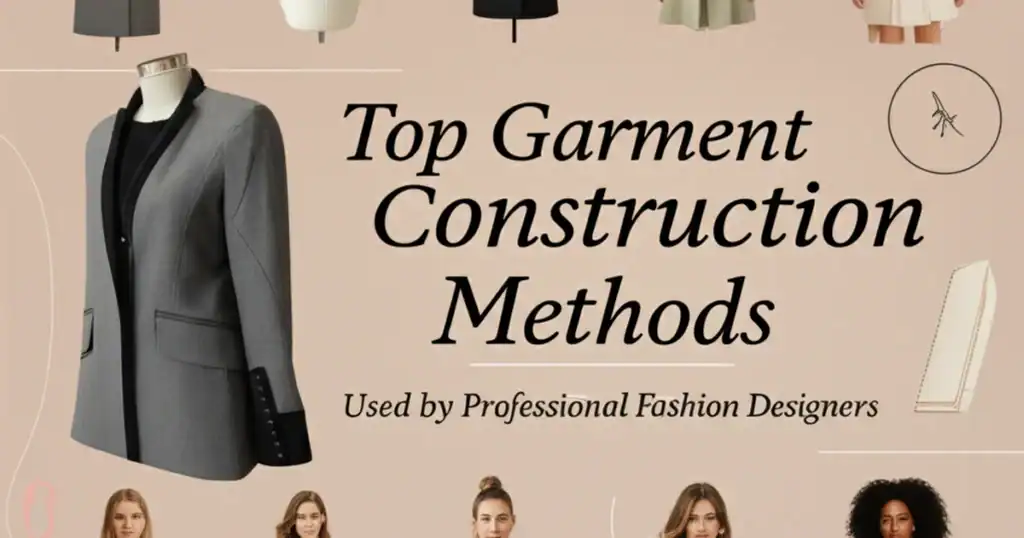
Top Garment Construction Methods Used by Professional Fashion Designers
Oh, the Garment Construction sheer magic of a beautifully constructed garment! It’s what separates a fleeting trend from a timeless piece, a basic from a masterpiece. For those of us who live and breathe fabric, thread, and the transformative power of design, understanding the core garment construction methods isn’t just about technique – it’s about speaking the language of true craftsmanship. You, my fellow professionals, advanced students, meticulous manufacturers, and inspiring educators, know that the journey from a two-dimensional sketch to a three-dimensional form is a delicate dance. It’s where vision meets execution, where the invisible threads of professional sewing techniques weave a narrative of quality and intent. Today, I want to pull back the curtain on the fundamental approaches that define the fashion industry methods of the masters, not just *what* they are, but *why* they matter and the profound impact they have on the final product. Let’s delve deep into the art and science that truly elevate design. — What’s the True Cost of a Seamless Story? (Tailored Construction) When you slip into a perfectly tailored jacket, do you feel the whisper of its internal architecture? That invisible structure, that undeniable presence, is the hallmark of tailored construction. This isn’t just about a good fit; it’s about building a garment from the inside out, creating a controlled, structured silhouette that often defies the natural drape of the fabric. It’s the method of choice for suits, coats, and any piece demanding crisp lines, defined shoulders, and a shape that holds its own. Think of it as garment engineering. You’re not just stitching fabric panels; you’re creating an armature using canvas, horsehair, and precise interfacings, meticulously hand-padded and machine-stitched to mold and support the outer fabric. The careful manipulation of the grainline, the strategic use of ease, and the unforgiving precision required in pattern drafting are paramount. I remember my first fully tailored jacket project in design school – the sheer frustration, then the overwhelming pride when the lapel rolled just so, a testament to hours of careful hand-stitching and steam. It taught me that sometimes, the most beautiful stories are the ones built on the strongest foundations. — Can You Hear the Whisper of the Invisible Hand? (Couture Construction) Now, let’s talk about the sublime. Couture construction, a realm where time is irrelevant and perfection is the only currency, stands as the pinnacle of professional sewing techniques. This method celebrates the individual garment, often a one-of-a-kind creation, and prioritizes beauty and finesse that transcends the visible. Here, much of the construction happens by hand – from the tiny, almost invisible prick stitches that secure linings, to the intricate beadwork, the meticulous application of embellishments, and the internal finishes that are a secret language between the garment and its wearer. What truly sets couture apart are its hidden luxuries: hand-bound buttonholes, intricate internal support structures that are sewn rather than fused, and seams that are often hand-finished to ensure both strength and an unbelievably smooth drape. It’s an approach where the garment’s interior is as flawless as its exterior, a testament to the artisan’s dedication. I once had the privilege of examining a vintage haute couture gown, and the sheer artistry of the interior – every seam perfectly enclosed, every facing hand-stitched with barely perceptible threads – spoke volumes about the maker’s respect for the craft and the wearer. It’s an education in itself, revealing that the true essence of luxury often lies in what you *don’t* immediately see. — Is Efficiency the Ultimate Art Form? (Industrial Flat Construction) In stark contrast to the individualistic nature of couture, we have industrial flat construction, the backbone of ready-to-wear and the mass production segment of the fashion industry methods. This method is a masterclass in efficiency, standardization, and repeatability. Garments are often designed to be constructed from as few pattern pieces as possible, with seams strategically placed for speed and ease of assembly on a production line. Think of the rhythmic hum of rows of sewing machines, each operator specializing in a single step, transforming stacks of fabric into finished apparel with astonishing speed. The art here lies not in individual embellishment, but in the intelligent pattern drafting and engineering that allows for consistent quality across thousands, sometimes millions, of units. Seams are often serged for speed and durability, interfacings are typically fused rather than sewn, and specialized machinery handles tasks like buttonhole creation or pocket setting with unparalleled precision. It’s an intricate dance of logistics, standardization, and quality control, designed to make fashion accessible without compromising too heavily on durability. For any garment manufacturer, optimizing this process is an art form in itself, balancing cost, speed, and acceptable quality standards to meet market demand. — Where Does the Fabric Truly Speak? (Draping & Moulage) Sometimes, the most direct path to a beautiful silhouette isn’t through two-dimensional paper patterns, but through the intuitive manipulation of fabric on a form. Draping, or moulage, is a highly sculptural garment construction method where the design literally comes to life directly on a dress form. Instead of flat sketches, designers work with fabric, pinning, tucking, and cutting directly on the three-dimensional body, allowing the material to dictate its natural flow and movement. This method is exceptional for creating garments with complex, organic shapes, intricate pleats, or fluid drapes that would be challenging to envision purely through flat pattern drafting. It allows for an immediate understanding of how a fabric will behave, how light will catch its folds, and how it will move with the wearer. Many evening gowns, avant-garde pieces, and designs that celebrate the body’s natural curves originate from draping. I’ve often seen designers lose themselves in the moment, fabric swirling around the form, as if having a silent conversation with the material until the perfect line or volume emerges. It’s a testament to the idea that sometimes, the most profound designs emerge not from rigid planning, but from an almost meditative, hands-on conversation with the textile itself. — The Unseen Threads of Mastery
